
The governments of Uganda and Denmark are exploring a structured Government-to-Government (G2G) cooperation agreement designed to overhaul Uganda’s fire prevention, emergency rescue, and hazardous-materials response capabilities.
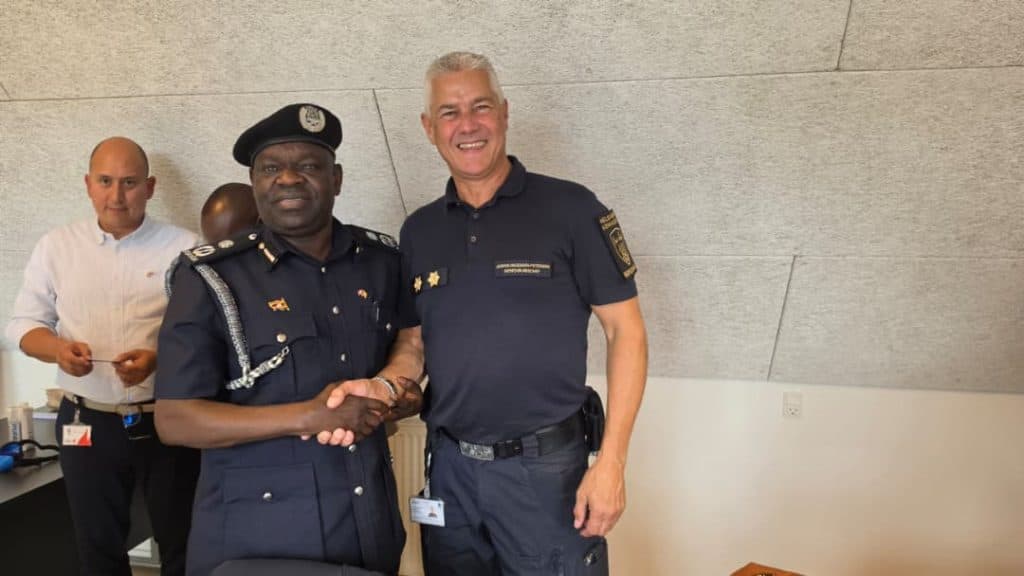
The bilateral initiative follows a high-level technical fact-finding mission by a multi-sectoral Ugandan delegation to specialized emergency and firefighting institutions across Denmark.
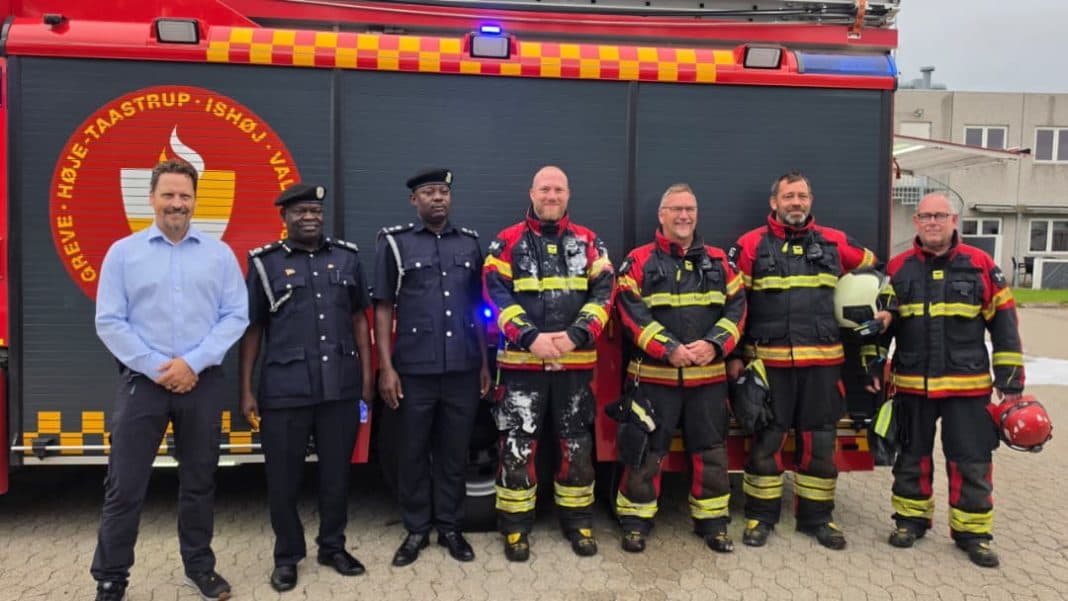
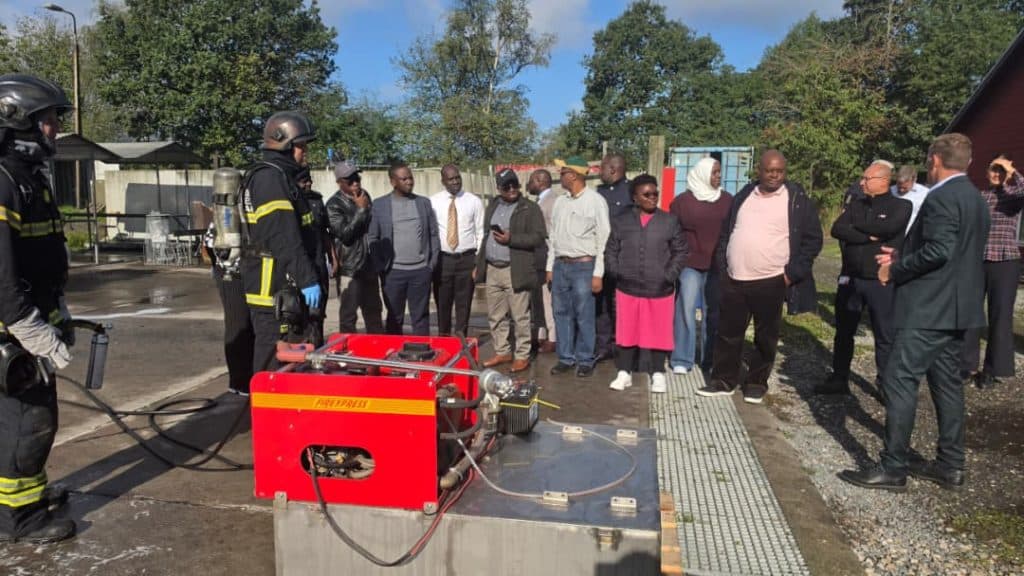
Coordinated by the Embassy of Uganda in Copenhagen under the stewardship of Ambassador Margaret M. Otteskov, the Ugandan delegation toured Falck Fire Denmark and the Falck Fire Training School in North Zealand.
Officials evaluated operational methodologies spanning emergency command and control systems, incident preparedness, training frameworks, and specialized equipment deployment.
The delegation brought together key decision-makers across government Ministries, Departments, and Agencies (MDAs), including:
- Central Ministries: Office of the Prime Minister (OPM), Ministry of Finance, Planning and Economic Development, Ministry of Works and Transport, Ministry of Local Government, Ministry of Internal Affairs, and the Ministry of Energy and Mineral Development.
- Security and Investment Bodies: The Uganda Police Force (Fire and Rescue Services Directorate), the Public-Private Partnerships (PPP) Unit, and the Uganda Investment Authority (UIA).
According to embassy officials, the mission was structured to establish a sustainable bilateral mechanism rather than serve as a routine study visit.
Key areas of cooperation currently under review include:
- Upgrading professional training programs for Ugandan firefighters.
- Modernizing institutional emergency dispatch, command, and cross-agency coordination systems.
- Procuring specialized high-rise rescue, industrial firefighting, and hazardous materials (HAZMAT) machinery.
- Developing dedicated emergency safety and fire-response infrastructure for the Albertine Graben petroleum corridor.
The push for upgraded emergency infrastructure comes as Uganda nears commercial oil production from the Tilenga and Kingfisher development projects.
The operation of heavy extraction fields, local processing facilities, and the 1,443-kilometer East African Crude Oil Pipeline (EACOP) necessitates specialized emergency containment capabilities for oil installations, transit routes, and host communities.
Bilateral discussions have outlined an indicative G2G investment envelope estimated between €50 million and €70 million (approx. Shs 200 billion to Shs 280 billion), pending comprehensive technical feasibility studies and project prioritization.
Ambassador Otteskov emphasized that developing resilient emergency response mechanisms is essential to protecting lives and shielding incoming foreign direct investment in manufacturing, urban centers, logistics corridors, and energy infrastructure.
“The Embassy is working to ensure that Uganda–Denmark relations translate into practical partnerships that strengthen Uganda’s institutional capacity, protect lives and property, and support investment,” Ambassador Otteskov noted, adding that modern emergency readiness is an indispensable requirement for Uganda’s industrial transformation.
Technical teams from both nations will continue joint reviews to assess specific institutional gaps within the Uganda Police Fire and Rescue Services and determine appropriate financing models and pilot projects before ratifying the formal cooperation treaty.