
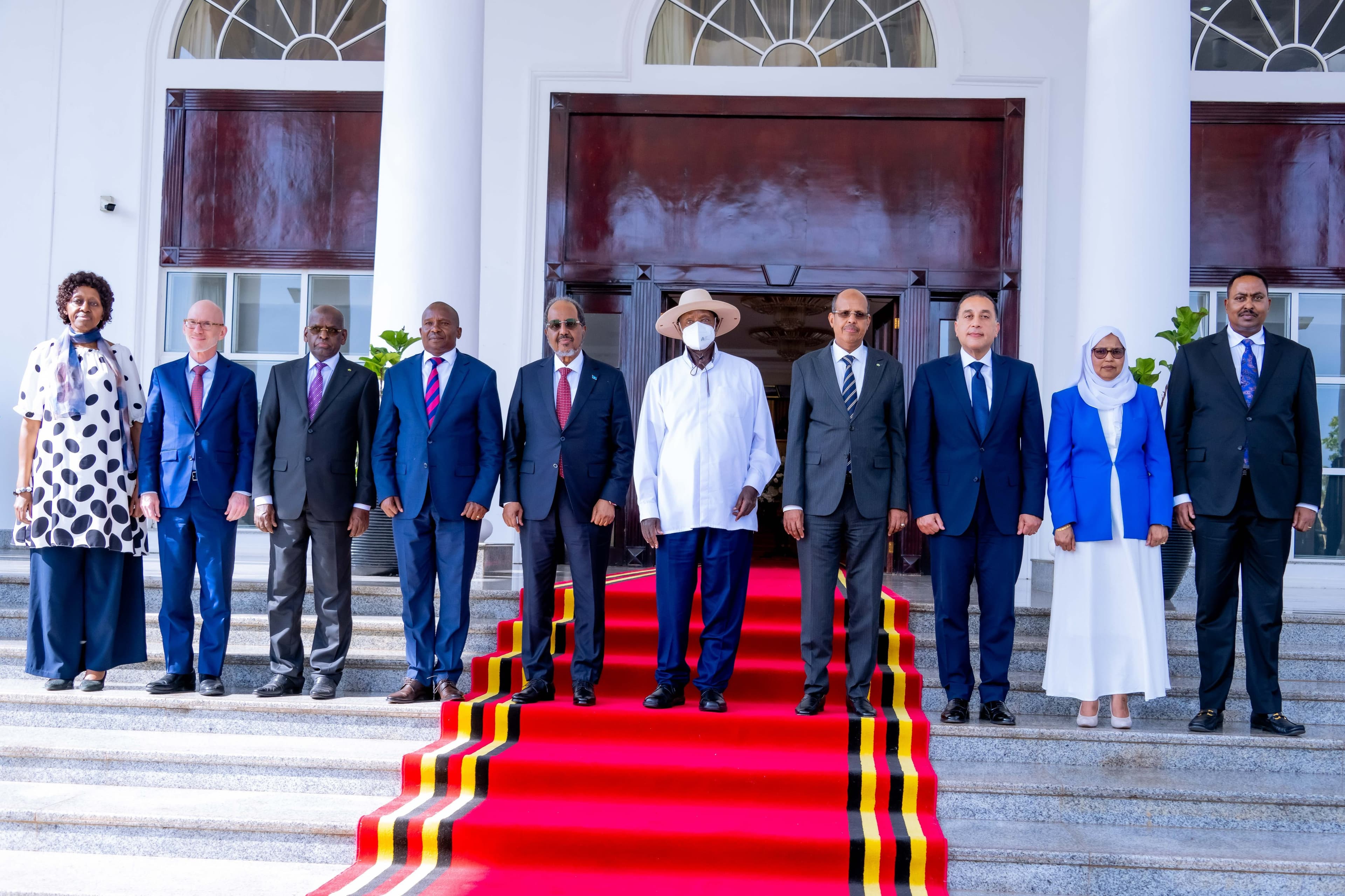
President Yoweri Kaguta Museveni has called on African countries and international partners to provide stronger financial and logistical support to Somalia, warning that limited assistance is prolonging insecurity in the Horn of Africa.
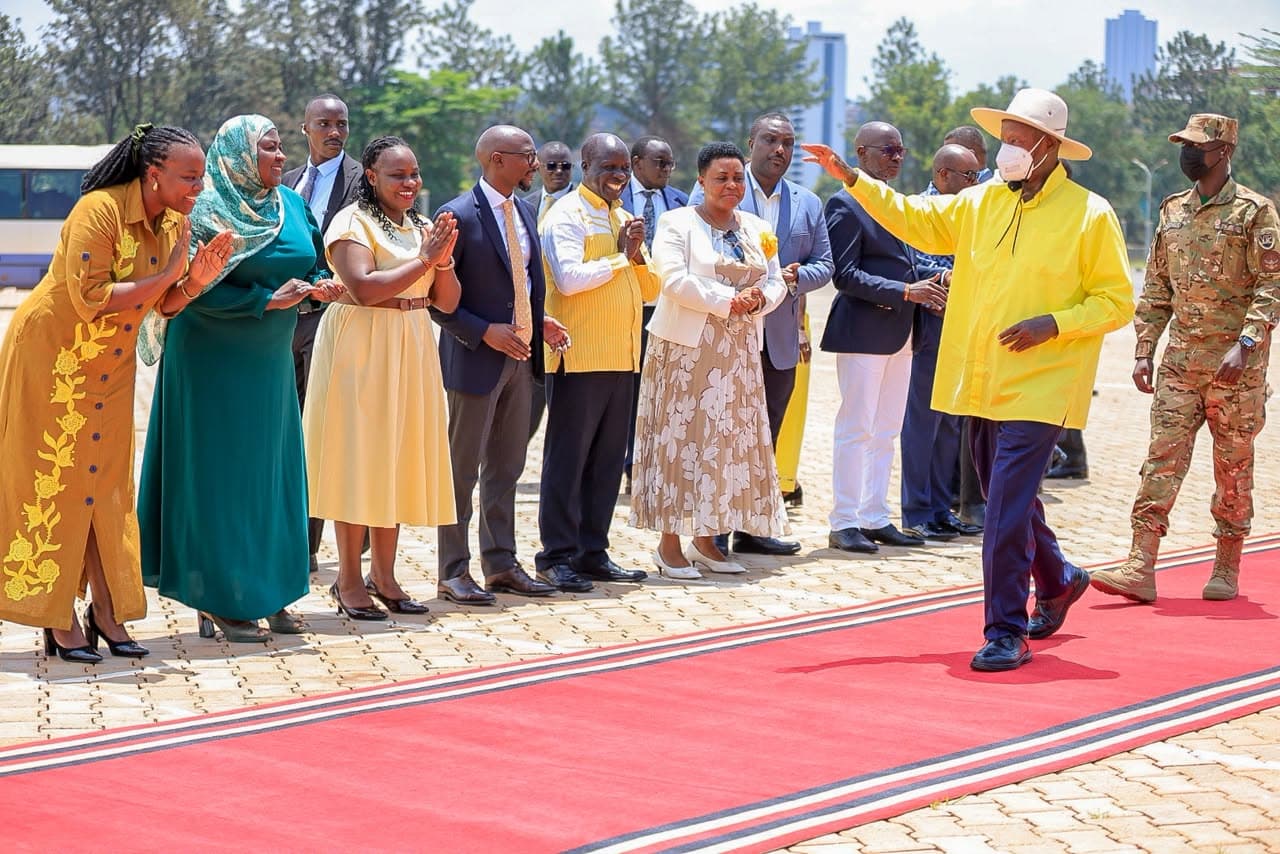
Speaking at the Extraordinary Summit of Troop-Contributing Countries (TCCs) to the African Union Support and Stabilisation Mission in Somalia (AUSSOM) on April 25, 2025, at State House Entebbe, President Museveni stressed the urgency of a well-supported and unified regional approach to peacebuilding in Somalia.
“We need to assist Somalia to get out of these problems. As you have heard, more money is needed to sustain the stabilization mission,” he said.
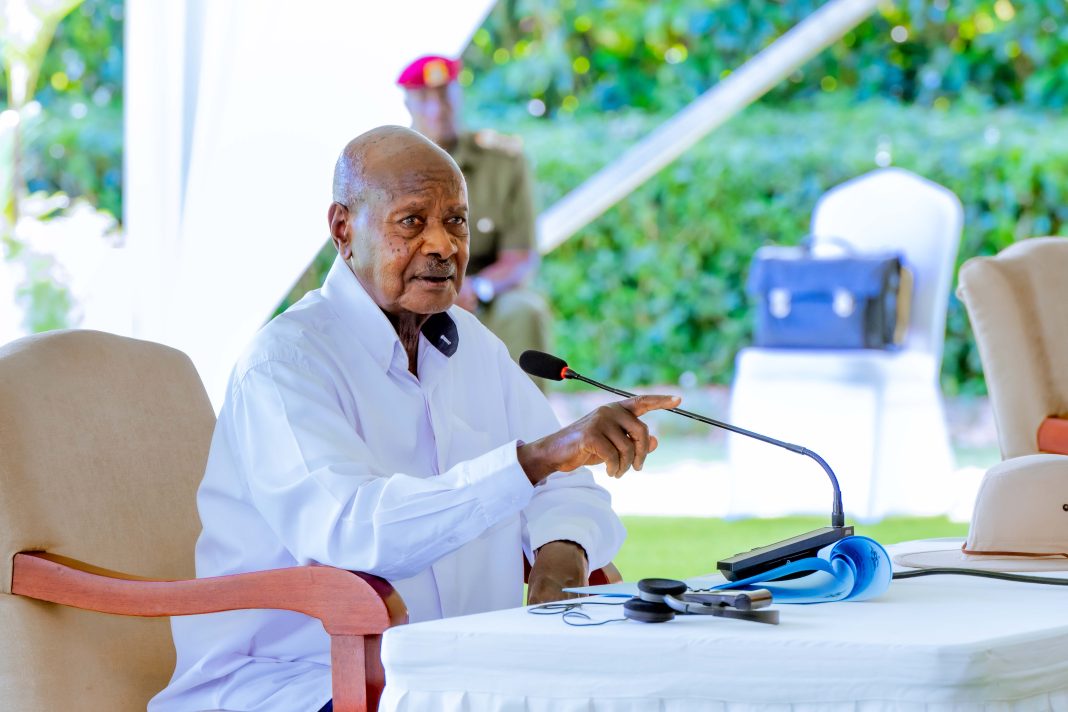
President Museveni criticized the insufficient funding of the Somali National Army and AUSSOM forces, calling it an “underdose” that has kept Al-Shabaab active. “Al-Shabaab is a weak force. If they had a healthy cause and support, they would have overrun Somalia by now,” he said.
He proposed the formation of a volunteer-based national army in Somalia, drawing from Uganda’s experience during the liberation struggle in 1979 when 9,000 troops were mobilized from 28 trained cadres without salaries.
“Somalia and its supporters must stop the under-dosing. We need enough, well-trained and well-equipped Somali soldiers or enough, properly equipped external forces. With adequate funding, Uganda is ready to contribute more troops,” he said.
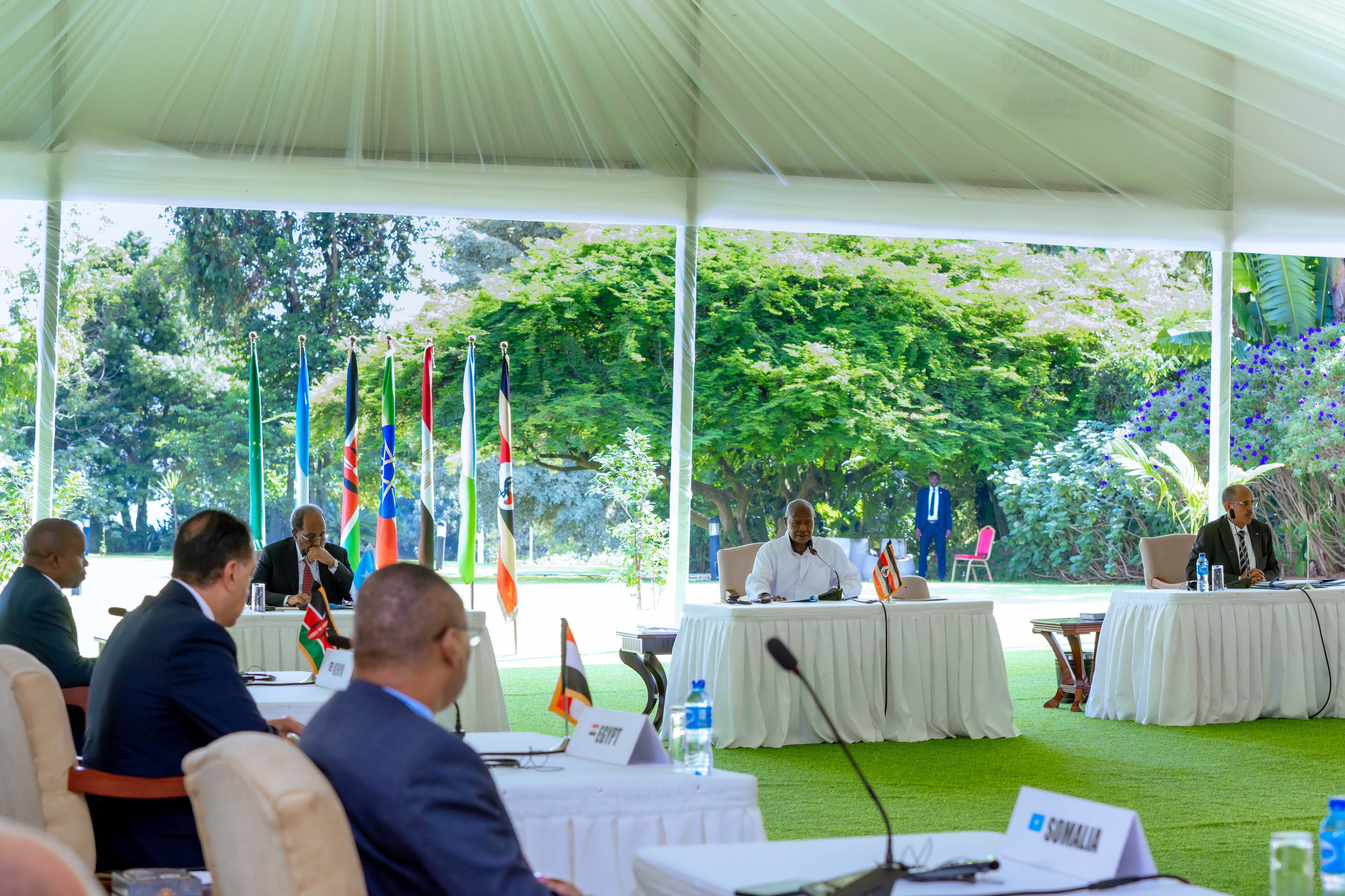
President Museveni also emphasized the importance of ideological clarity and Pan-African unity, saying it was solidarity that helped Uganda defeat Idi Amin with support from Tanzania and Mozambique.
“It is solidarity which helped Africa come to where we are today,” he said, adding that divisions based on ethnicity or clan hinder Africa’s progress. “If I was to play the politics of identity as a Munyankore, I would first be an enemy of the Banyankore before becoming an enemy of Uganda.”
He outlined the four ideological principles of the National Resistance Movement (NRM): Patriotism, Pan-Africanism, Socio-Economic Transformation, and Democracy, encouraging African leaders to adopt similar frameworks in addressing instability.
Somalia’s President Hassan Sheikh Mohamud thanked President Museveni and Uganda for their continued support. “I begin by thanking President Museveni for the warm welcome and generous hospitality. I also extend heartfelt appreciation to the troop-contributing countries for their commitment,” he said.
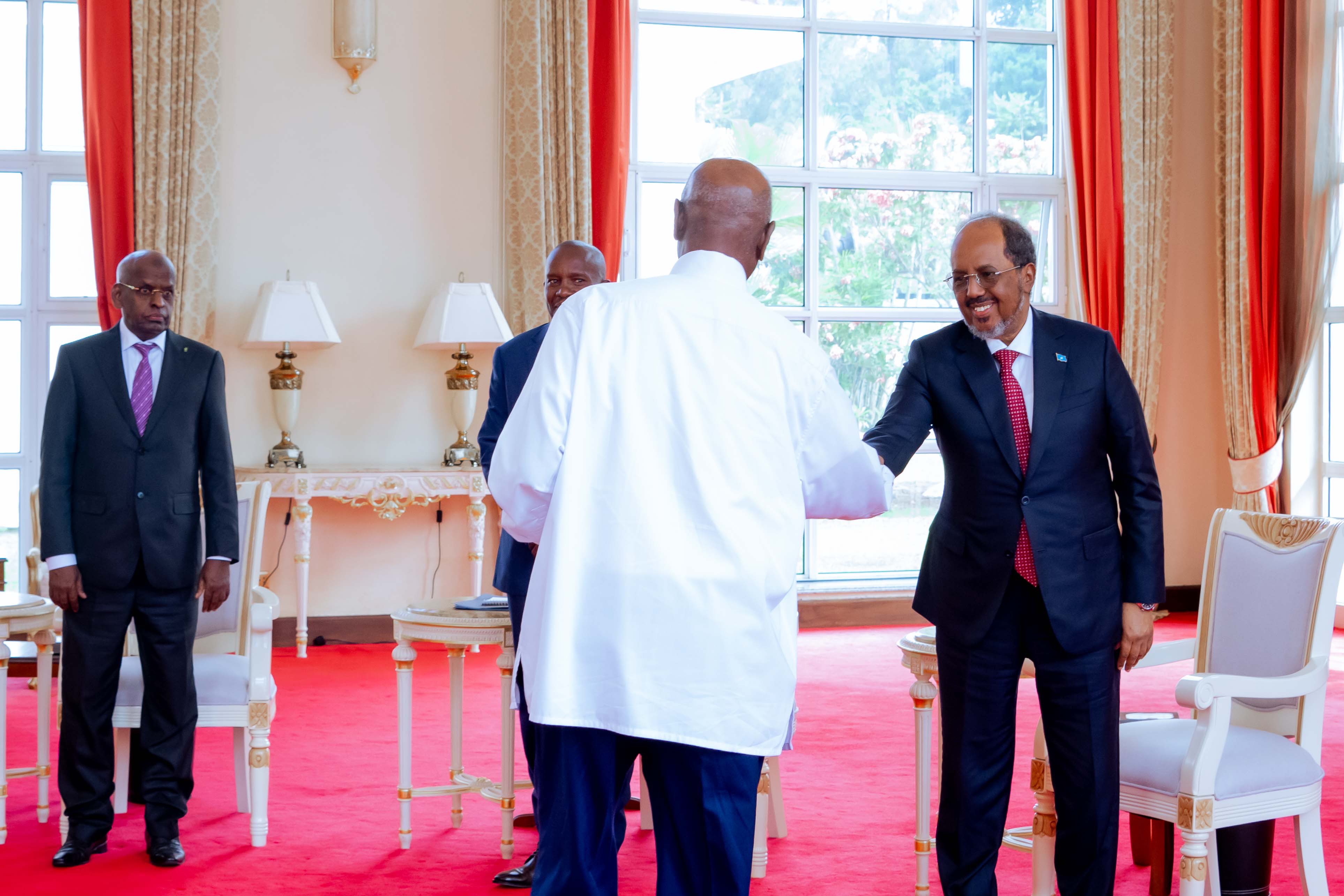
President Mohamud praised the progress made against Al-Shabaab and highlighted the role of AU forces in restoring order. “Our sacrifices are not in vain. The support we’ve received... has been critical to saving lives and restoring hope in our country.”
He noted that Somalia has made significant progress on political dialogue and electoral reforms, with over five million people participating in the current electoral process. However, he warned that the fight against terrorism remains at a critical juncture.
“We face serious challenges, but the gains we’ve made show that victory is possible. We must now agree on a clear roadmap for financing and sustaining our efforts,” he said.
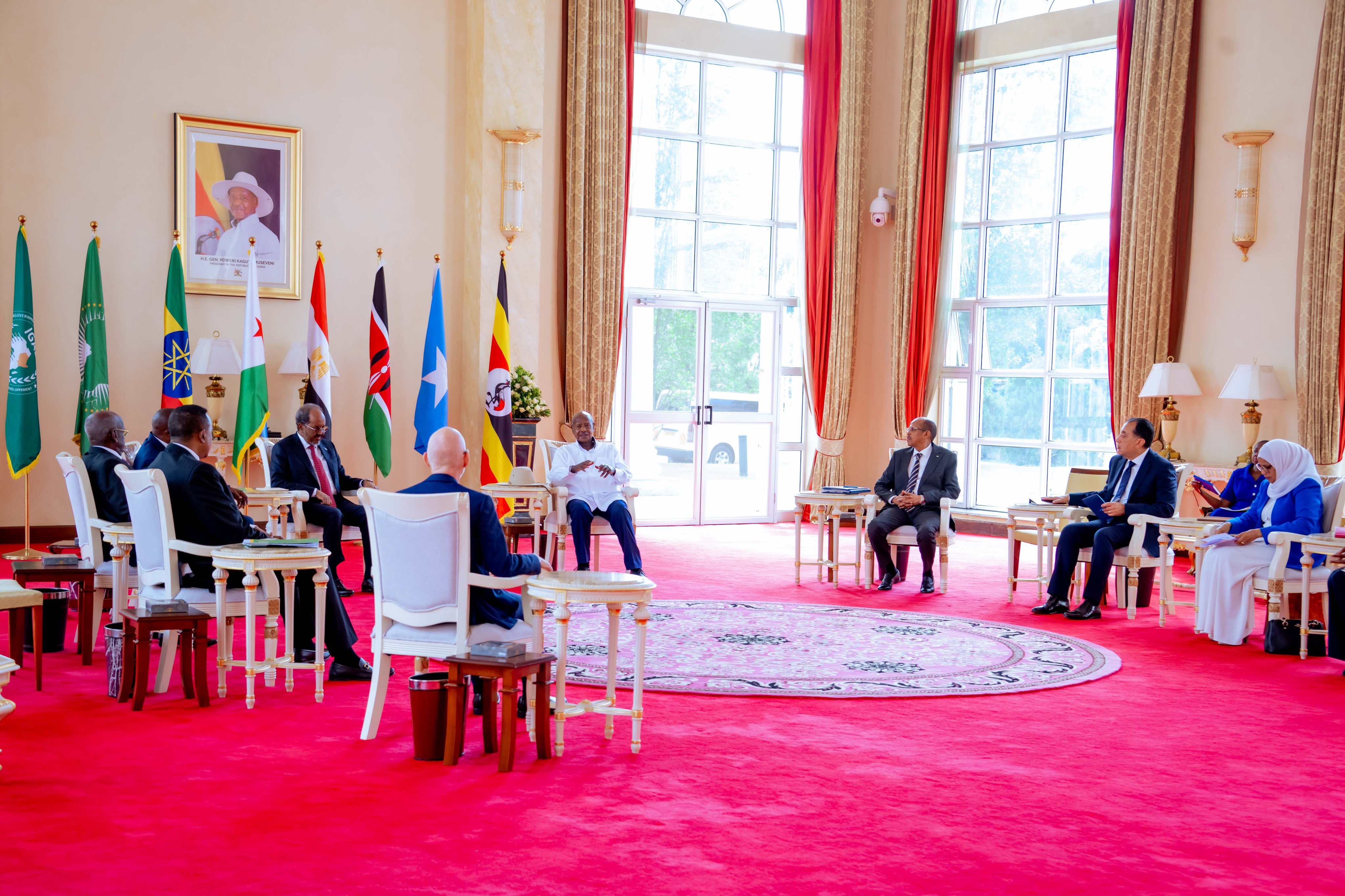
President Mohamud reaffirmed Somalia’s commitment to working with partners through the Contact Group on the Somali Transition (CGST), chaired by President Museveni, to implement the Somali Security and Development Blueprint (SSADB).
Mahmoud Ali Youssouf, Chairperson of the African Union Commission, commended Uganda for hosting the summit and honored the sacrifices made by troop-contributing countries.
“We salute the bravery of our forces and mourn the heroes who have fallen in the quest for a stable Somalia,” he said.
He urged the Somali government to accelerate the generation and equipping of national security forces. “Accelerating the development of Somalia’s security forces is crucial for sustaining the gains made and for the country’s long-term peace,” he said.
Youssouf reaffirmed the AU Commission’s support for Somalia and called for sustained international cooperation. “The AU Commission remains steadfast in its support for Somalia, working closely with our partners to ensure the country’s path to recovery and prosperity,” he said.
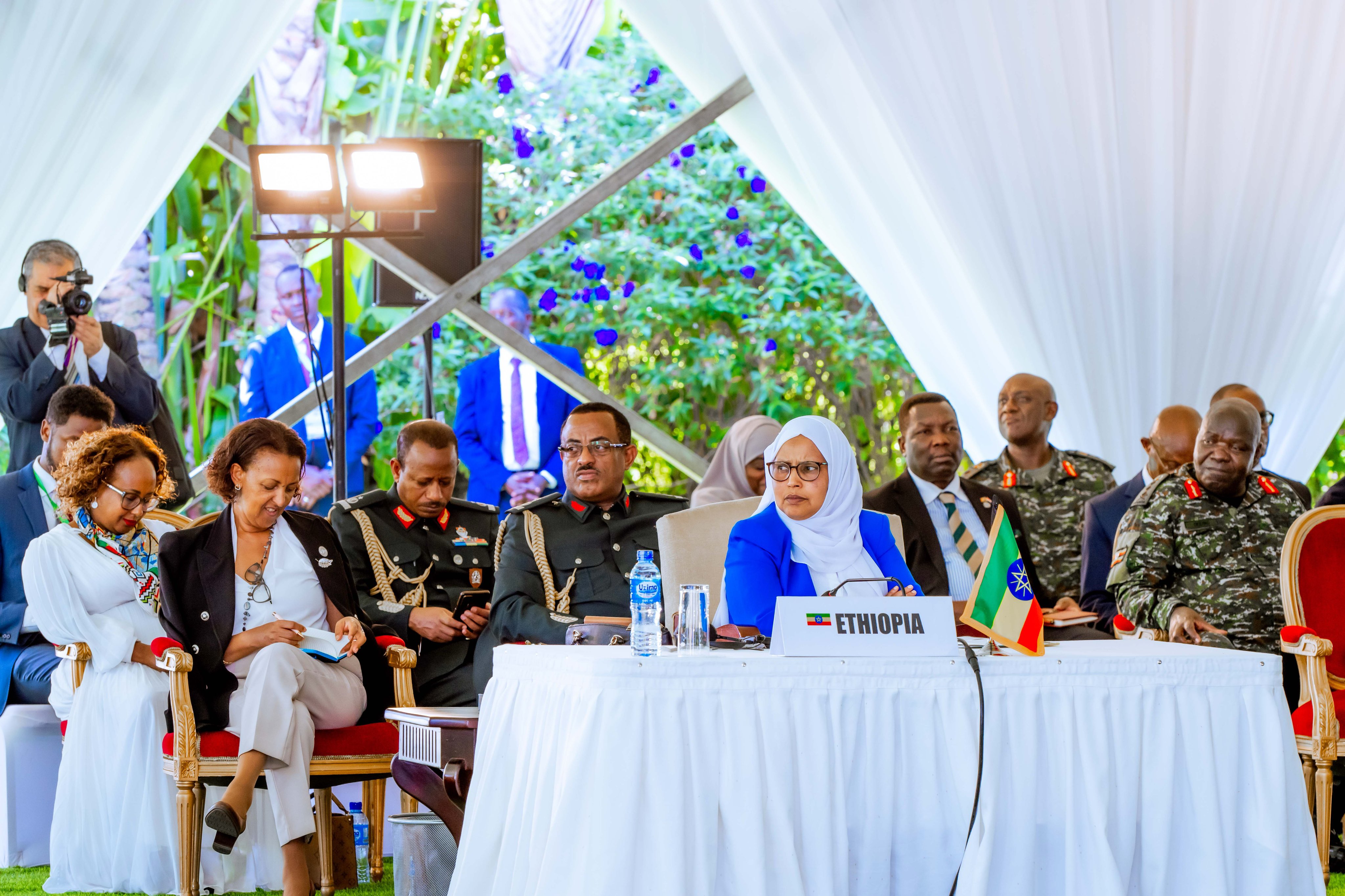
Other summit attendees included Abdoulkader Kamil Mohamed, Prime Minister of Djibouti; Prof. Kithure Kindiki, Deputy President of Kenya; Dr. Mostafa Madbouly, Prime Minister of Egypt; Eng. Aisha Mohammed Mussa, Ethiopia’s Minister of Defence; and Dr. Workneh Gebeyehu, Executive Secretary of IGAD.
The summit concluded with a renewed call for solidarity, increased troop contributions, and a well-funded and coordinated regional approach to stabilizing Somalia.