

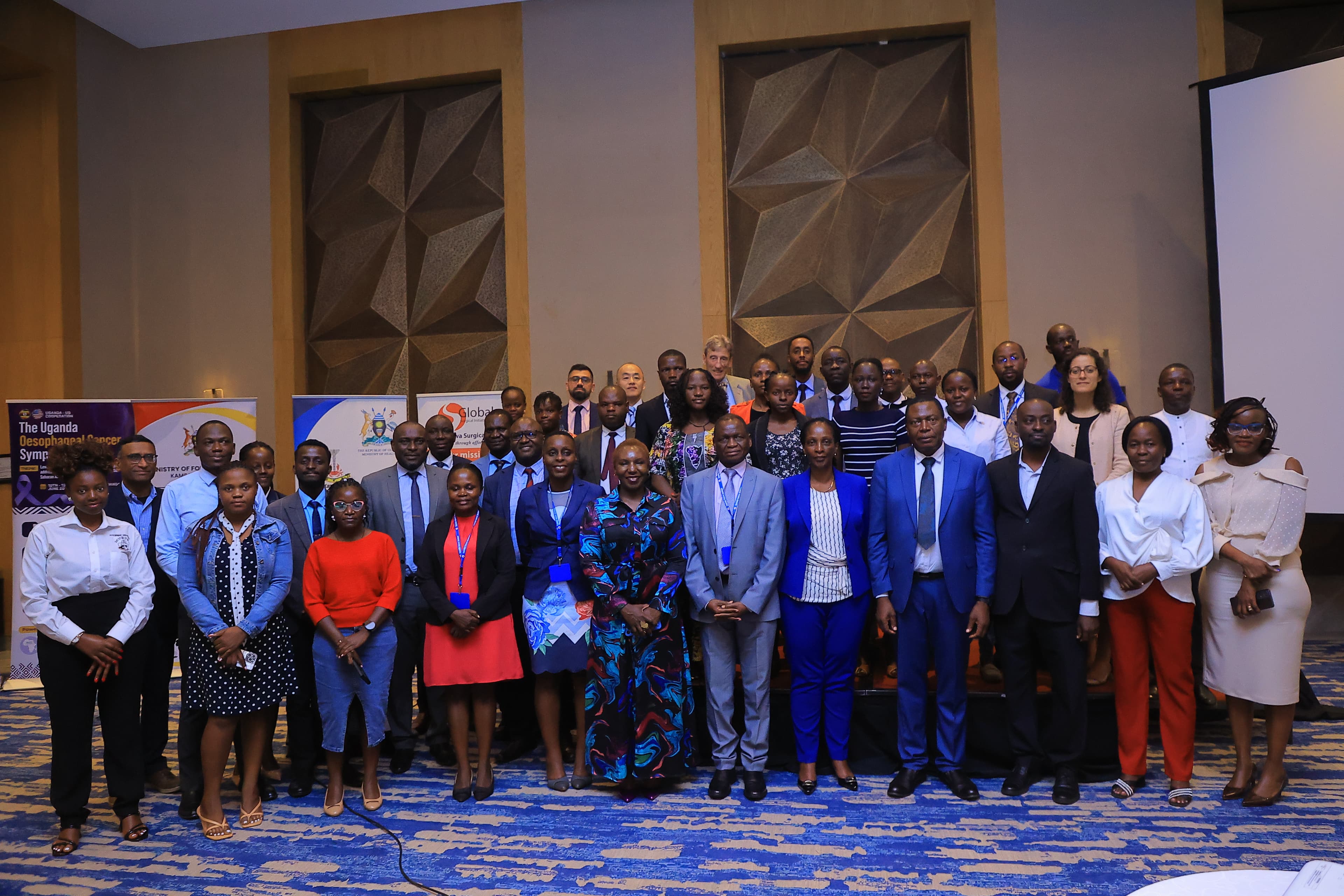
The Uganda Embassy in Washington, D.C., in collaboration with the Uganda Cancer Institute (UCI) and partners such as AFRECC, Olympus, and Kyabiirwa Surgical Center, hosted a high-profile Oesophageal Cancer Symposium at the Four Points by Sheraton in Kampala. The event, held under the theme "Leveraging Science, Innovation, and Technology to Address the Burden of Oesophageal Cancer in Sub-Saharan Africa," brought together health experts, diplomats, academics, and private sector representatives.
The symposium came after a specialized surgical training at Kyabiirwa Surgical Center in Jinja, where over 50 patients received treatment. During the training, experts explained the importance of applied science in tackling pressing health issues in Uganda.
The event was not only an academic exchange but also a gathering for survivors, caregivers, and health professionals in low-resource settings. Personal stories complemented policy discussions, showcasing a mix of lived experience and expert insight that added depth and diplomatic importance to the event.
Presentations also delved into the socio-economic and cultural factors surrounding non-communicable diseases. Speakers addressed the impact of public behaviour, as well as the roles of industries like tobacco and alcohol in increasing cancer rates. Emphasis was placed on the need for a multi-sectoral approach to health, integrating regulation, education, and innovation to build resilient health systems.
Uganda’s Ambassador to the United States, Robie Kakonge, spoke on the importance of technology in bridging geographical gaps in healthcare. She described embassies as both diplomatic posts and facilitators of development. "With limited resources and high expectations, we walk a fine line.
But strategic partnerships and shared responsibility remain our greatest assets," she said. Ambassador Kakonge also highlighted the contributions of Japan and the United States in global health efforts, urging the need to "think beyond borders and budgets."
Japanese Ambassador to Uganda, Takuya Sasayama, shared his thoughts on the growing partnership between Japan and Uganda, particularly in the areas of health cooperation and infrastructure. "Our collaboration is not a project. It is a relationship," he said, emphasising mutual respect and long-term investment in people.
In his keynote address, Dr. Charles Olaro, Director General of Health Services, represented Uganda's Minister of Health. He spoke about the country’s commitment to early cancer detection and HPV vaccination for girls under 14. "When we delay, we pay," he warned, noting the rising human and economic costs of late diagnosis. Dr. Olaro also stressed the importance of addressing mental health concerns alongside cancer care.
Dr. Jackson Orem, Executive Director of UCI, framed the symposium as a convergence of science, innovation, and diplomacy. He urged global partnerships to help tackle Uganda’s cancer burden, calling for localized innovation and the democratization of science. His words resonated deeply with the international delegates in attendance.
As the symposium concluded, it was clear that Uganda is positioning itself as a key player in the global dialogue on cancer care, resilience, and shared humanity. In a world grappling with health disparities, Uganda’s message remains simple: "Let us heal together."