

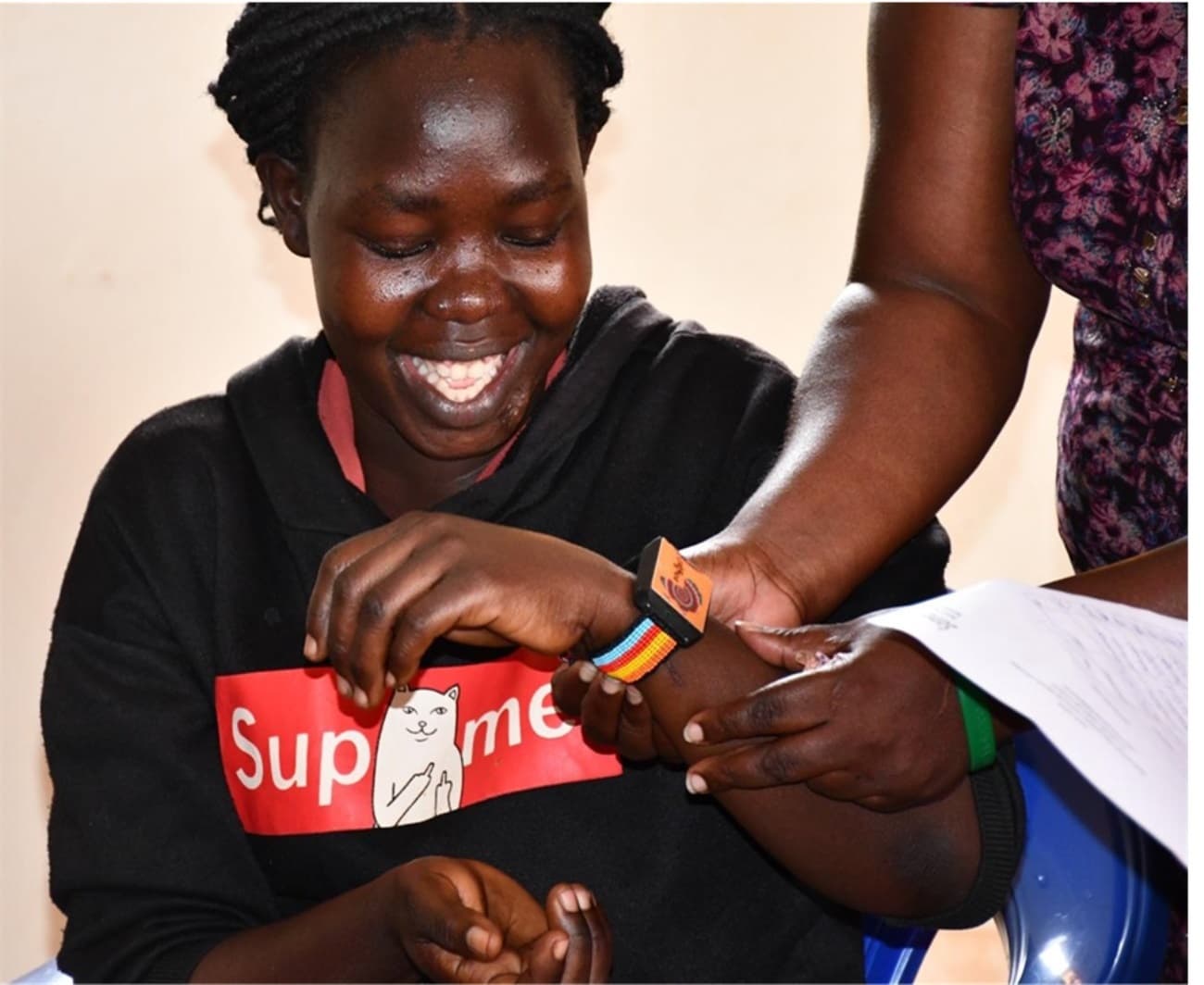
SafeBangle Technologies, an innovation incubated at Makerere University, has won the prestigious World Summit Award (WSA) 2025 for its innovative contribution to combating gender-based violence (GBV) in Africa. The award, presented at the WSA Global Congress in Hyderabad, India, recognises the development and implementation of a real-time domestic violence reporting bracelet.
Represented by Saul Kabali, Messach Luminsa, and Janet Christine Nabaloga, the SafeBangle team proudly showcased Uganda's innovation potential on a global stage. SafeBangle was awarded in the Inclusion & Empowerment category for its cutting-edge wearable safety bracelet, designed to address the urgent challenge of GBV across Africa.
The SafeBangle bracelet, which functions like a smartwatch, allows users to send SMS alerts with a single button press in the event of domestic violence. The device aims to create a safer, more secure environment for women and children in Africa by providing an affordable and accessible tech solution.
Saul Kabali and Messach Luminsa, the innovators behind SafeBangle, expressed that the award came at a crucial time. "This award is a powerful affirmation of our mission and refuels our commitment to empowering Ugandan women and girls through innovation and technology. It influences our next steps by opening doors to new partnerships, increasing our credibility, and accelerating efforts to scale SafeBangle nationally," they said.
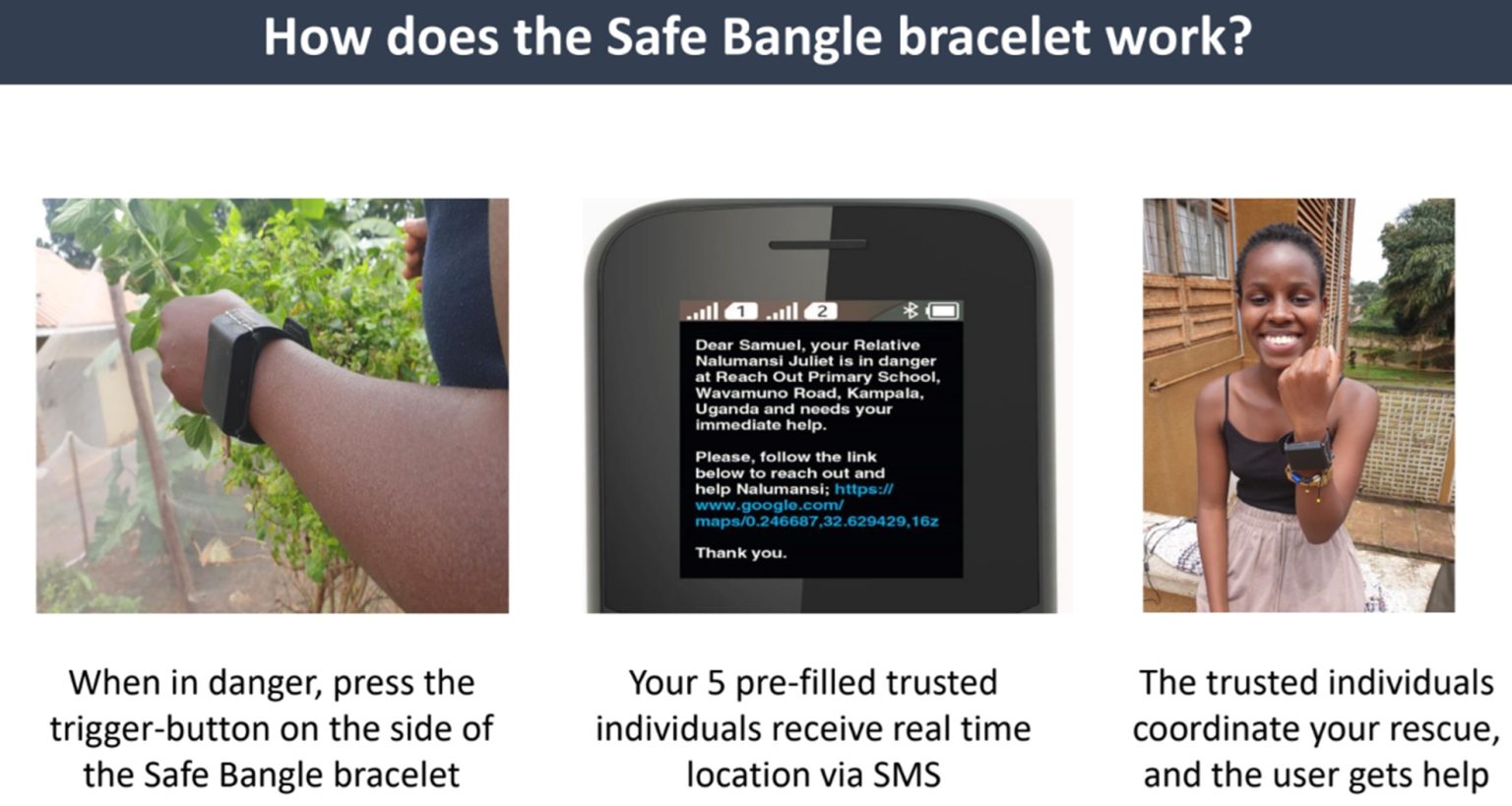
The team called on the government to support the SafeBangle innovation, urging for funding, policy support, and collaborative platforms for innovation. "Governments can support us by providing funding, facilitating policy support, and creating collaborative platforms for innovation. NGOs can help with grassroots outreach and connect us to potential donors and funders interested in solving Sexual and Gender-Based Violence among vulnerable communities. Tech partners can enhance scalability through infrastructure, data insights, and capacity building," they added.
The SafeBangle team emphasised the importance of innovation, partnership, and purpose to scale their impact. "As we empower communities, invest in local solutions, and promote collaboration, we can transform how technology protects and uplifts women and girls across Uganda," they concluded.
The idea behind the SafeBangle bracelet was inspired by a deeply personal story. "We heard countless stories of women who couldn’t call for help during moments of danger. We were deeply affected by the story of Aisha, a young woman in a rural village who was attacked while walking home alone at night. With no way to call for help, she felt helpless and vulnerable. This incident made us realise the critical need for immediate reporting alert tools," said Kabali and Luminsa.
Dr. Juliet Kiguli, from Makerere University School of Public Health, who worked closely with the SafeBangle team, described the award as a vote of confidence in the university's efforts to address domestic violence. "The award-winning innovation stems from a study led by Makerere University, identifying gaps in reporting and response to GBV, particularly in informal settlements. SafeBangle was incorporated as an intervention to provide an immediate and affordable reporting tool for violence," she explained.
The research team, which includes Dr. Juliet Kiguli, Dr. Roy Mayega, and Dr. Agnes Nyabigambo, piloted the bracelet under the PEER program, supported by USAID and the National Academies of Sciences. More than 1,000 users have piloted the technology, resulting in a 63% reduction in response times.
The SafeBangle team also participated in the “Equity by Design” panel at the WSA Congress, sharing insights on inclusive technology development with global experts. The initiative was supported by USAID and the National Academy of Sciences in Washington, DC, with contributions from institutions such as the Medical College of Wisconsin and Somero Uganda.