

Uganda’s trade sector has remained resilient despite the Covid-19 lockdown which continues to limit or has stopped operations of some sectors.
According to a report released by the finance ministry on the performance of the economy in July, the country’s exports increased by 33.6% from $338.1 million in June 2020 to $451.7m in July.
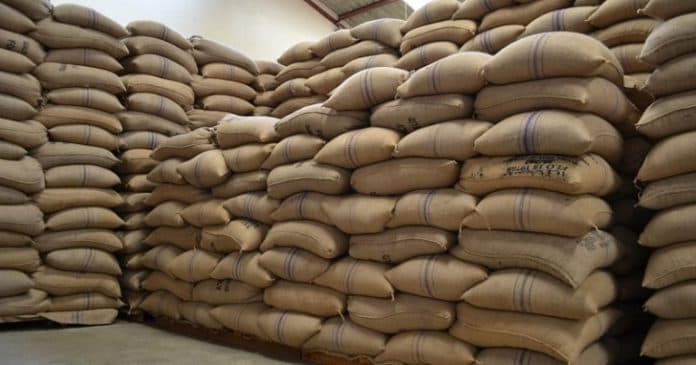
Most of the money came from coffee, minerals, cotton, tea, tobacco, beans, simsim and flower exports.
Coffee exports grew by 46.4% during the period due to higher export volumes, says the report.
However, the report says that the Covid-19 pandemic continues to have a significant bearing on the economy.
“The lockdown measures announced during the second half of June 2021 to curb the resurgence in infections extended through July 2021, with movements restricted and majority of businesses remaining closed,” says the report.
“The lockdown affected the level of economic activity with adverse effects experienced by sectors that remained in full lockdown like education and transport (except for cargo transport). Other sectors which were also severely affected are the Small and Medium Enterprises (SMEs) as well as hotel and accommodation.”
For the same period, imports saw the East African spend $933.6m from $542.6m.
The growth was attributed to a rise in both government and private sector imports.
“There was an increase in imports of chemical & related products; machinery, equipment, vehicles &accessories; plastics, rubber &related products; and petroleum products,” says the report.
The merchandise trade deficit widened by 135.6% to $481.8m in July from $204.5m in June 2020 due to a higher increase in the import bill which offset the rise in export earnings.
Government revenue collections were also not met, with Shs1.384 trillion collected in July 2021, representing 90.6% performance against the planned target.
Of this, Shs1.344trn was tax revenues while Shs39.64 billion was non-tax revenues.
The ministry says the weak pace of economic activity in July 2021 is expected to affect real GDP growth for the first quarter of FY 2021/22.
“However, given Government interventions through the capitalization of the SME recovery fund, boosting the Emyooga funds and the on-going vaccination efforts, the impact on the overall GDP is expected to be less severe. The economy remains on course to achieve a growth rate of between 3.5% to 4.0% during FY 2021/22,” says the report.