

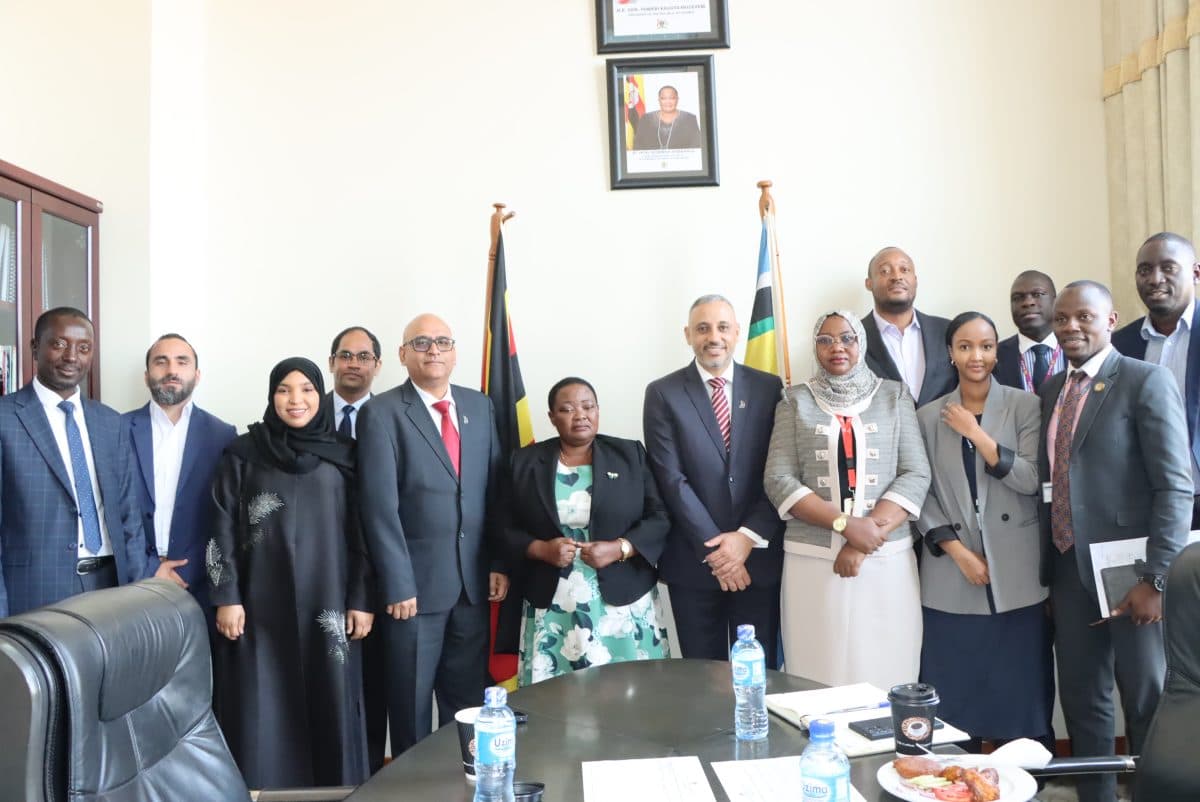
Prime Minister Robinah Nabbanja has directed the Kampala Capital City Authority (KCCA) to draft a law requiring households to sort garbage at the source. The proposed regulation would mandate households to separate waste into categories such as organic, plastics, glass, and metal to improve waste management in the city.
Nabbanja tasked KCCA Executive Director Hajjat Sharifah Buzeki to work with the Solicitor General to develop the legal framework. She emphasized the need for a permanent solution to Kampala’s waste problem, proposing that garbage be converted into useful products like fertilizers.
“We want to turn garbage into fertilizers and other products instead of treating it as a challenge,” Nabbanja said during a meeting with a delegation from the United Arab Emirates (UAE) at her office in Kampala on Thursday.
The delegation, led by Dr. Puneet Sarna, Senior Director of Operations at Beeah Group, visited Uganda as a follow-up to Nabbanja’s recent working visit to Dubai. Beeah Group specializes in waste management, including collection, sorting, and recycling.
Nabbanja cited Italy as an example of effective waste management, where strict regulations penalize households that fail to sort their garbage.
“It is simple—when the law is in place, and you fail to comply, you will be penalized,” she said.
Buzeki expressed confidence that the planned interventions would resolve the city’s long-standing waste crisis.
“We have had several engagements, and there is hope that when the project kicks off, the challenge of garbage will be addressed once and for all,” Buzeki said.
Robert Mukiza, the Director General of the Uganda Investment Authority (UIA), noted that discussions with the UAE delegation also explored other investment opportunities beyond waste management.
Dr. Sarna reaffirmed Beeah Group’s commitment to partnering with Uganda.
“We have had good engagements with stakeholders and will brief our directors back home as soon as possible,” he said.
If implemented, the proposed waste management law would mark a significant step in addressing garbage collection and disposal challenges in Kampala, which has struggled with waste buildup due to its high organic content.