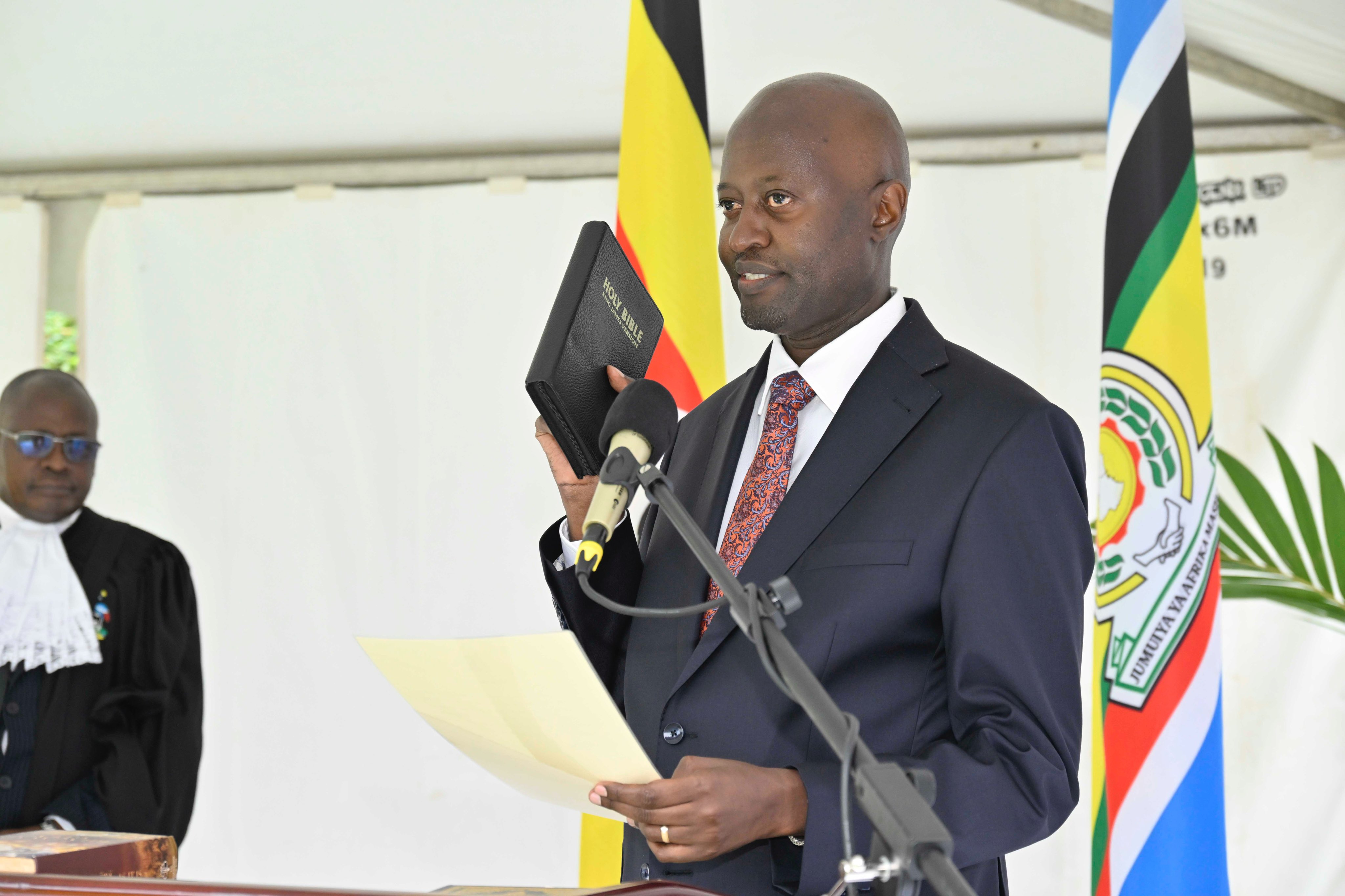

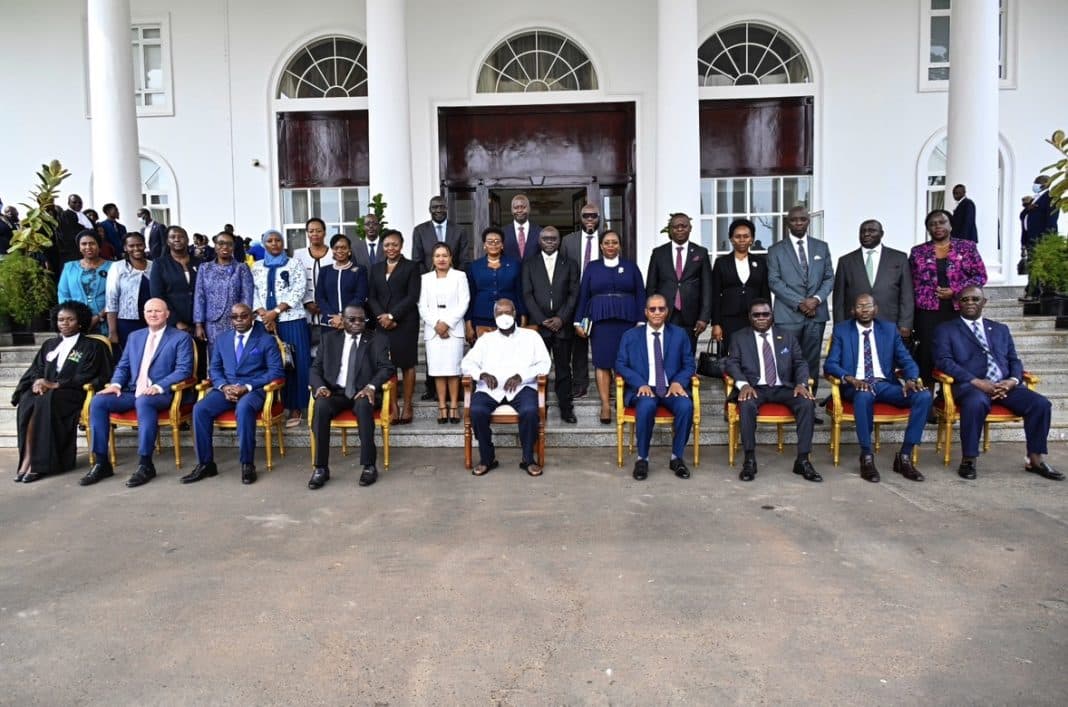
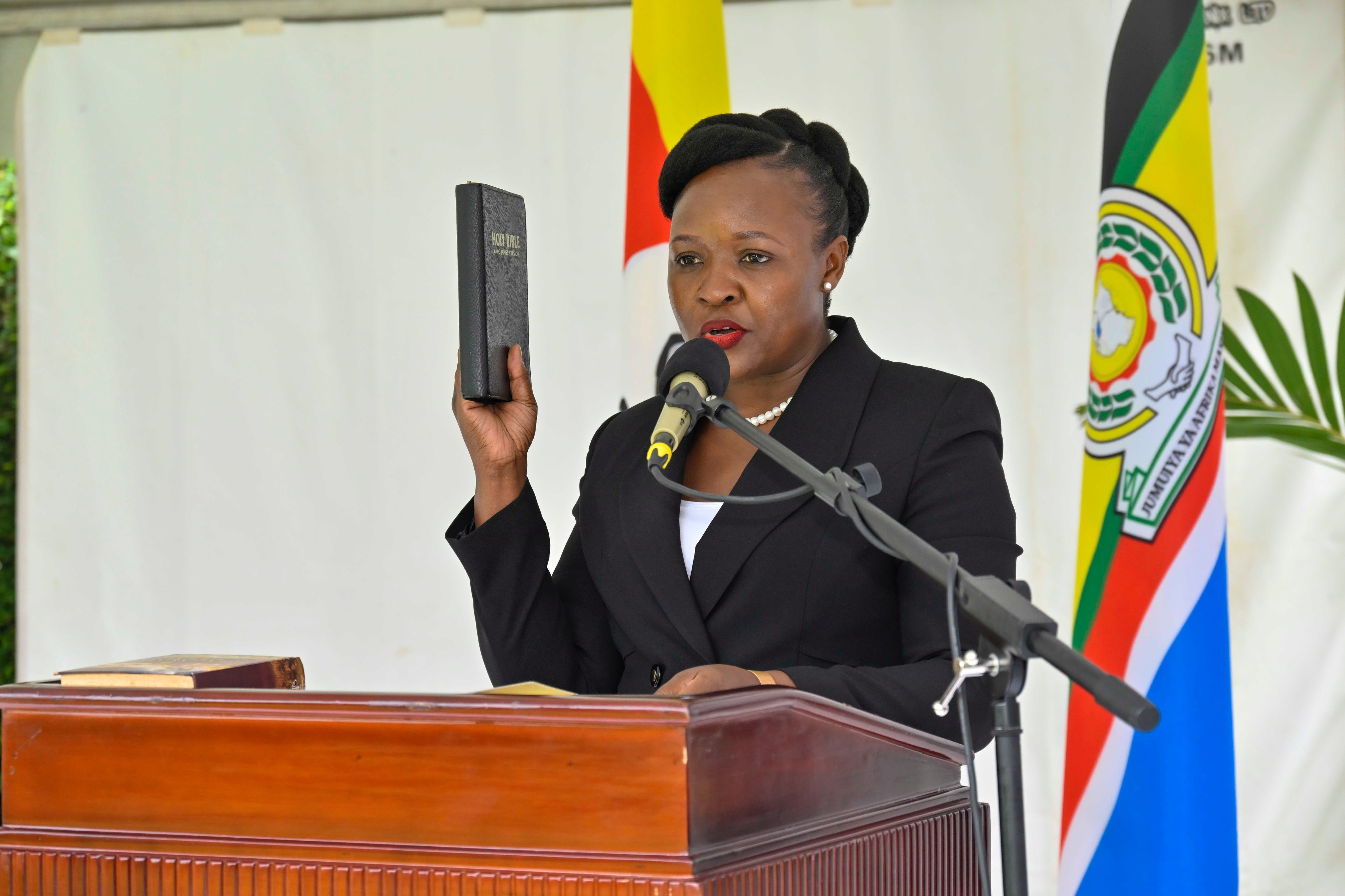
Twenty-one newly appointed High Court judges were sworn in at State House, Entebbe, as President Yoweri Kaguta Museveni called for the expansion of Alternative Dispute Resolution (ADR) mechanisms to grassroots levels, emphasizing their effectiveness in delivering fast and affordable justice.
Museveni proposed renaming ADR to “Original Dispute Resolution,” arguing that traditional conflict resolution systems have long existed in African cultures and should be integrated into the formal justice system.
“According to our original dispute resolution, like in Banyankole tradition, if a woman was unhappy in her marriage, she would return to her parents, and both families would have a roundtable discussion. Whoever was found wrong would compensate the other, except in serious cases like murder,” he said.
He urged judicial officers to make ADR more accessible to ordinary citizens by empowering local tribunals to handle minor cases.
“We need to take ADR down to the villages. Let local tribunals handle cases like stolen goats or family disputes. It’s cheaper, quicker, and rooted in our culture,” Museveni said.
The President criticized the expensive nature of the current legal system, arguing that prolonged legal battles deny justice to the common person.
“Why can’t you sit down and listen instead of standing here and there with arguments of objection and ‘My Lord’? This system you are using is very expensive,” he said.
Museveni cited the biblical story of King Solomon as an example of effective dispute resolution, highlighting the need for swift and fair decisions.
“Even King Solomon used this system about 4,000 years ago. When two women claimed to be the mother of a child, Solomon ordered the baby to be cut in half. The real mother pleaded to spare the child’s life, and Solomon gave the child to her. That was fast, fair, and effective dispute resolution,” he explained.
The President also called for stricter measures against individuals who steal government resources meant to uplift vulnerable communities.
“For the judiciary, I am appealing to you—no more bail for such cases,” he said firmly.
He urged judicial officers to prioritize three key principles in delivering justice: calmness (obuteka), fairness (obulinganiza), and economic strength (enkubito).
Chief Justice Alfonse Owiny-Dollo echoed Museveni’s sentiments, stressing that ADR plays a critical role in maintaining stability.
“Over 90% of all known disputes worldwide are resolved through ADR. What has stabilized Uganda is not just the formal justice system but also traditional and informal justice mechanisms,” Owiny-Dollo said.
He urged the President to allocate a budget for ADR to institutionalize and strengthen the system.
Minister of Justice and Constitutional Affairs, Norbert Mao, reminded the newly appointed judges of their duty to uphold the rule of law and deliver justice without bias.
“We call upon the newly sworn-in judges to remember that they, too, will be judged by history, by the people, and by their conscience,” Mao said.
He praised the diversity in the new judicial appointments, stating that it would strengthen Uganda’s justice system.