

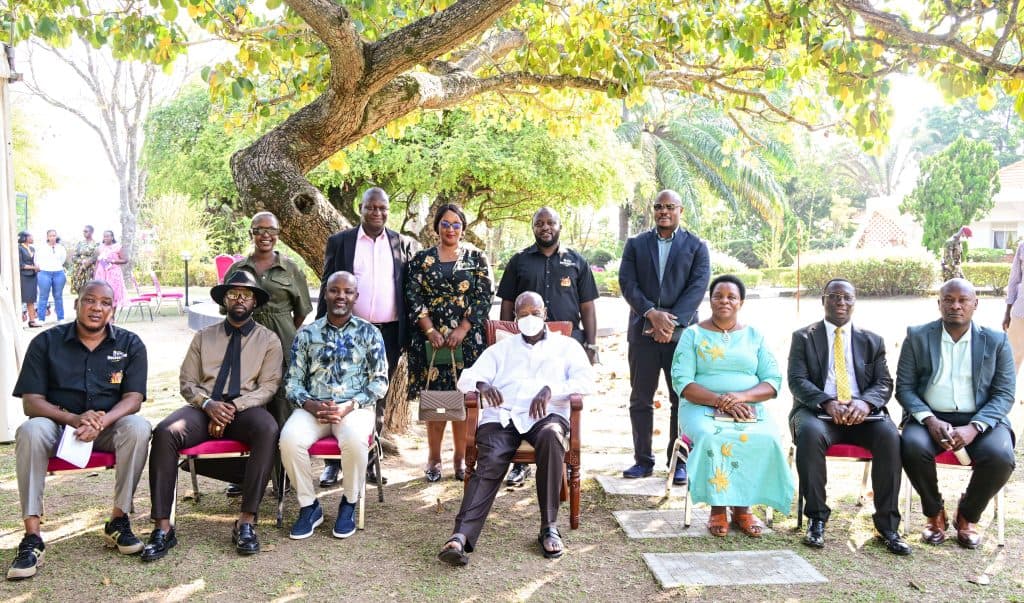
President Yoweri Kaguta Museveni has approved the operationalization of a copyright management system aimed at strengthening intellectual property rights and ensuring fair compensation for creatives in Uganda.
Speaking at a meeting in Rwakitura on Friday, February 28, 2025, Museveni acknowledged the need for technology to track music usage and ensure artists receive earnings from their work.
“When tape recorders came, the main problem was recording someone’s song on the radio and multiplying it for economic gains. Now, this technology should be able to tell us who has played my song and where, or that what you have sung belongs to someone else,” Museveni said.
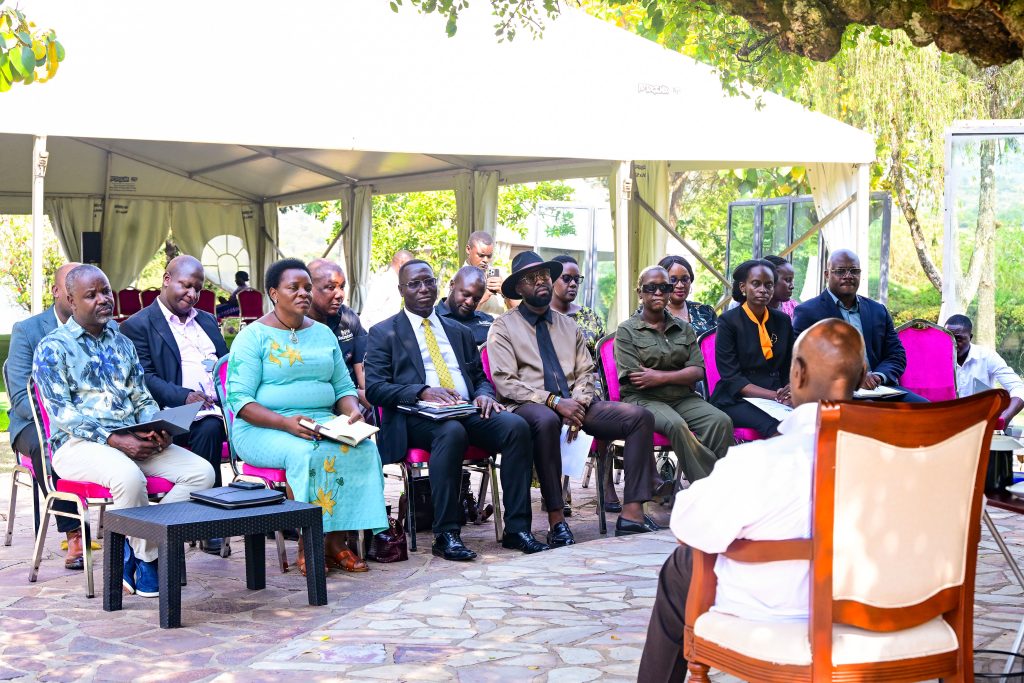
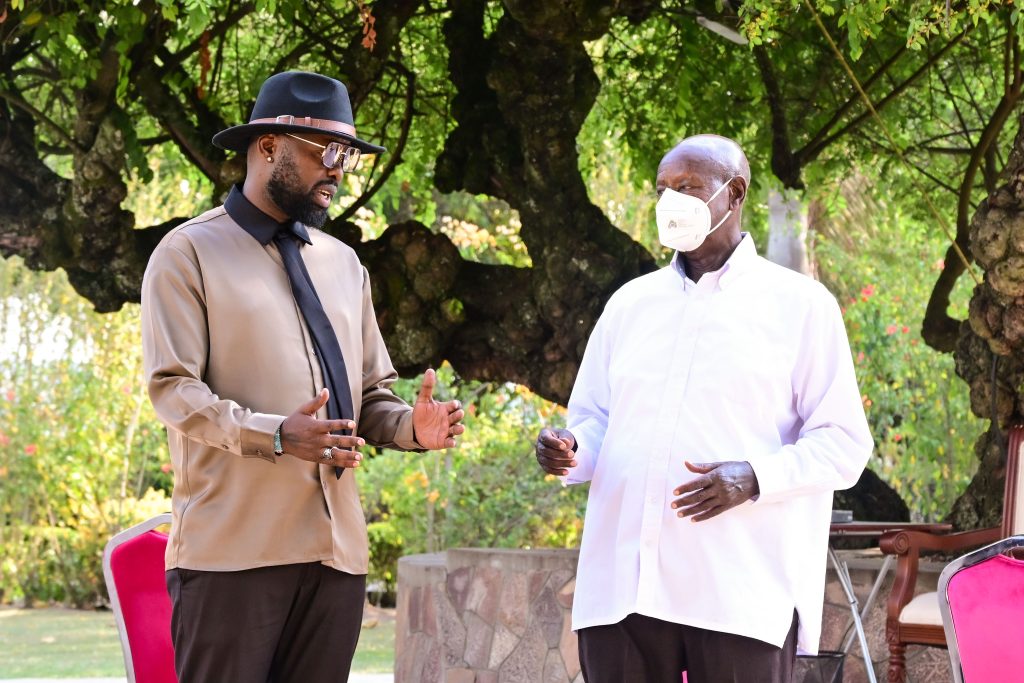
The meeting was attended by Deputy Speaker of Parliament, Thomas Tayebwa, Minister of State for Gender and Culture, Peace Mutuuzo, and a delegation of musicians led by Edrisah Musuuza, alias Eddy Kenzo, the Senior Presidential Advisor for Creatives and President of the Uganda National Musicians Federation (UNMF).
The new copyright management system will enable artists to register their works, track usage, and receive payments. According to Dr. Joel Isabirye, the Principal Development Economist at State House, businesses playing music will be monitored, and artists will earn based on the frequency of their songs being played.
“If you own a bar or hotel and play music by Afrigo Band, the customers coming in are attracted by that music. The President and artists believe musicians should receive a share of the revenue because their work is generating business,” Isabirye explained.
He added that radio and television stations benefiting from playing local music should share part of their advertising revenue with the artists.
To enforce compliance, entertainment venues will be required to install monitoring devices before receiving operational licenses. The Uganda Communications Commission (UCC) and police will oversee implementation, ensuring only licensed venues play copyrighted music.
“Police will enforce this by ensuring all places playing music have the required detection devices. UCC will monitor which songs have been played and notify authorities if a venue has not paid for its license,” Isabirye said.
Musicians have long decried losses due to weak copyright protections. Under the new system, revenue from music licensing will be distributed based on play frequency.
“For instance, if a bar, radio, or TV station pays Shs1 million for a license, an artist whose song is played 60 times will earn 60% (Shs600,000), while the remaining amount is shared among others,” Isabirye noted.
He emphasized that the system will provide lifelong earnings for musicians, even after their careers decline.
“Many artists struggle financially when they can no longer perform. This system ensures they continue earning as long as their music is played,” he added.
The meeting also included members of the UNMF and the State House science team, led by Engineer Sheba Kyobutungi.