

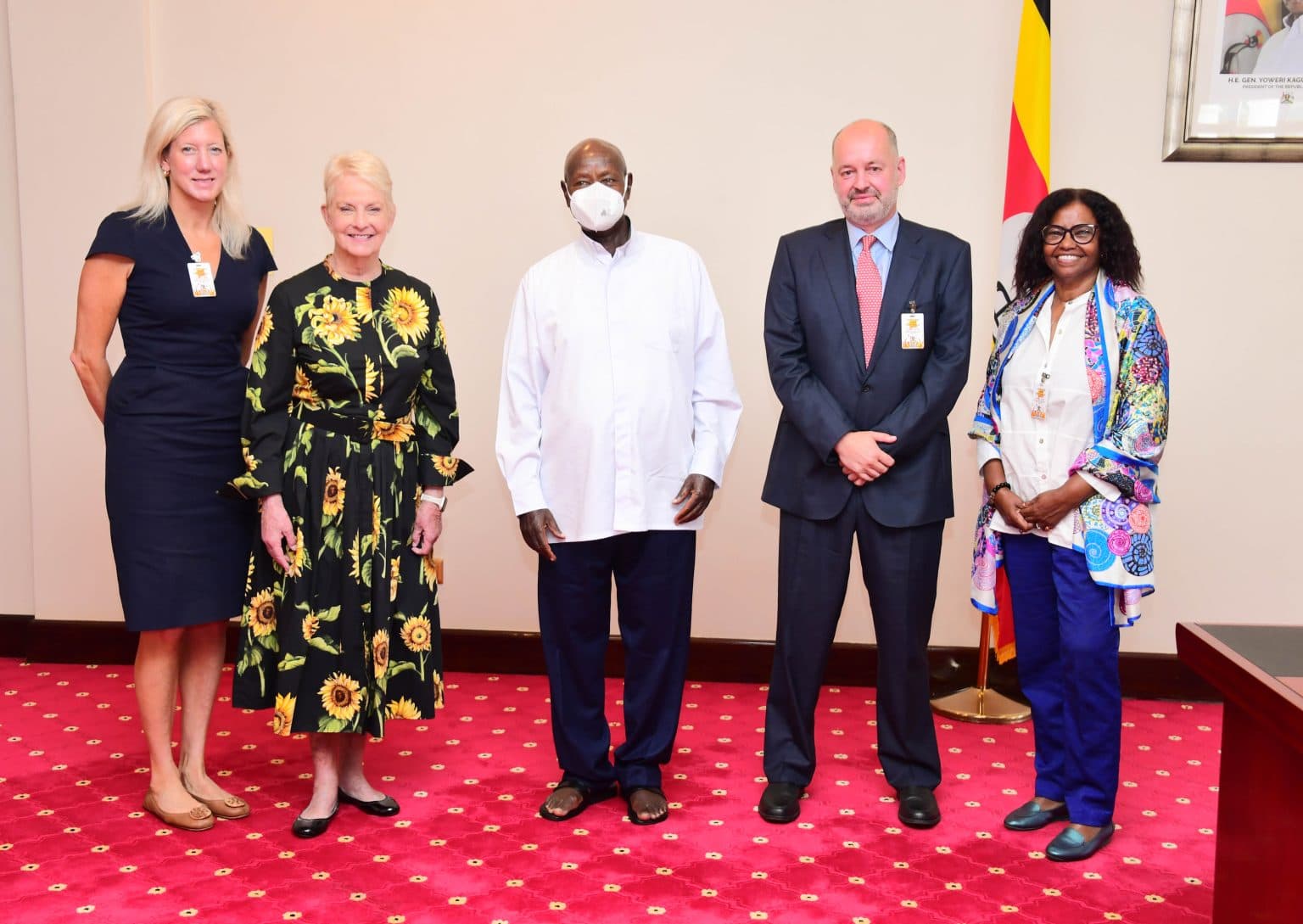
President Yoweri Kaguta Museveni has urged the World Food Programme (WFP) and development partners to shift focus from short-term humanitarian aid to long-term, agriculture-driven solutions to strengthen refugee self-reliance in Uganda.
During a meeting with WFP officials at State House, Entebbe, on April 10, 2025, President Museveni stressed the need to reorganize refugee settlements to promote efficient land use and large-scale food production.
“We must move beyond emergency response,” President Museveni said. “Refugee settlements are often spread out with scattered shelters, which wastes land and limits economic activity.”
He proposed that settlements be reorganized into planned, compact villages, freeing more land for farming and creating opportunities for both subsistence and commercial agriculture.
Using Nakivale Refugee Settlement as an example, President Museveni said its 71 square miles could transform into productive farmland under proper planning. “The land is there. What we need is better planning and infrastructure so refugees can grow their own food and reduce reliance on aid,” he added.
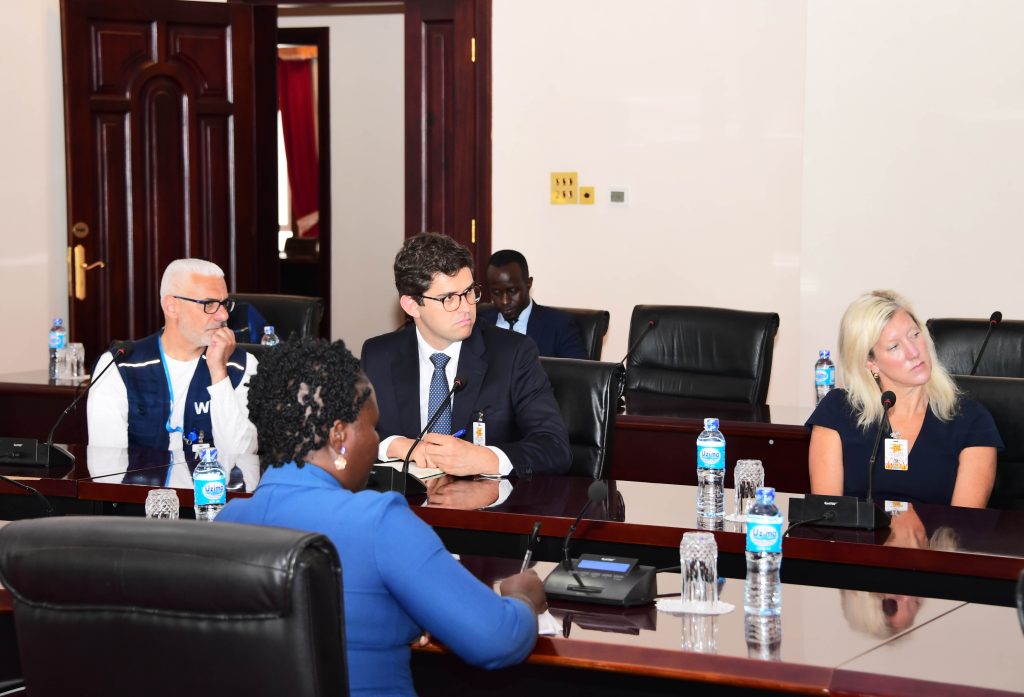
Museveni emphasized that Uganda’s open-door refugee policy is rooted in its Pan-African belief in unity and shared heritage. “These people are not foreigners in the real sense. Our borders are artificial, drawn by colonialists. Many refugees share cultural ties with Ugandans,” he said.
WFP Executive Director, Cindy McCain, welcomed the President’s proposal, praising Uganda for its forward-thinking refugee policies and agricultural potential.
“The land here is vast and fertile. WFP is confident that Uganda’s plan will create agricultural opportunities and strengthen refugee-hosting communities,” McCain said. She pledged WFP’s continued support to help Uganda reduce dependence on humanitarian aid and encourage sustainable development.
McCain also applauded Uganda’s approach to refugee integration, calling it a global model. “We are impressed by Uganda’s bold and compassionate refugee policies,” she said. “Your country has opened its doors to people seeking safety. This reflects Uganda’s commitment to regional stability.”
Marcus Prior, WFP’s Country Director in Uganda, commended the collaboration between the government and WFP. “We have an excellent working relationship with the Ministry under Eng. Hilary Onek, and that partnership is key to our progress,” Prior said.
He also praised WFP Uganda staff for their resourcefulness, adding that the agency continues to seek innovative ways to maximize its impact despite tight resources.
The meeting was attended by WFP’s Deputy Regional Director Rukia Yacoub, Chief of Staff Meghan Latcovich, and officials from the Office of the Executive Director, Alessandro Ceretti and Julian Civiero.