

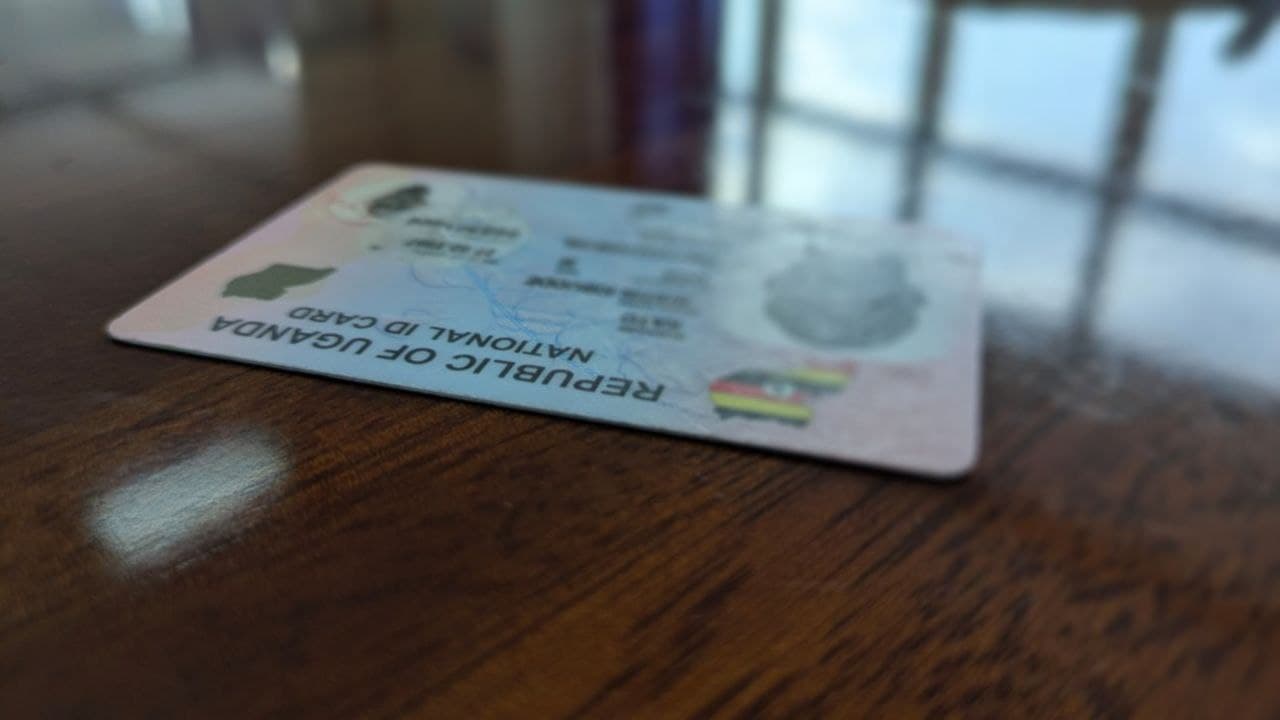
The Government of Uganda has launched the highly anticipated National ID renewal exercise, with a pilot phase running from May 2 to May 26, 2025. This phase will involve the National Identification and Registration Authority (NIRA) Board and Ministry of Internal Affairs leadership, before nationwide registration begins on May 27, 2025.
A fee of Shs 200,000 will be charged for any changes or corrections to existing IDs, while a fee of Shs 50,000 applies to replace lost cards. This initiative follows a Cabinet-approved decision from August 2022, which aims to renew 15.8 million National IDs that will expire in June 2025. The exercise also targets registering 17.2 million Ugandans.
In support of this process, NIRA signed a contract with Tahaluf Al Emarat Technical Solutions in July 2024 to procure 5665 biometric registration kits, which were delivered by January 2025 and distributed nationwide from February 2025. The deal also saw the installation of two card production machines capable of printing up to 100,000 laser-engraved cards per day, delivered in March 2025. Additionally, data centre equipment, including servers and communication tools, was set up between October 2024 and January 2025.
The new system offers online pre-registration for biographical data and will include iris scanning as a biometric feature. Biometrics will only be captured at NIRA-designated registration points. A link to the pre-registration platform will be available on NIRA’s website starting May 27, 2025.
Renewal of National IDs will be free of charge, as long as applicants present the original or a photocopy of their expired ID card. If the ID is lost, a valid police letter will be sufficient. For children under 18, registration will also be free, with the requirement of a photocopy of at least one parent’s National ID. If neither parent is available, identification from a grandparent or blood relative will suffice.
For adults seeking new registration, a photocopy of a parent's National ID, or a grandparent or blood relative's identification, along with a valid letter from local authorities, will be required. In certain cases, a certificate of citizenship from the Directorate of Citizenship and Immigration Control is necessary.
For those needing to make changes or corrections to their details, this service will be available only at NIRA district offices. Replacement of lost IDs will require proof via a police letter or expired ID.
NIRA aims to issue new National IDs and National Identification Numbers (NINs) within four weeks of submitting an application. However, applicants may experience longer processing times in the first three to five months due to high volumes of submissions. After this initial period, processing times are expected to be reduced to two weeks.
The goal is to renew all expired IDs before the statutory instrument extending their validity expires on August 12, 2025. Once processed, IDs will be available for collection at the applicant’s registered place of residence.
Citizens who already have a NIN are advised not to re-register but to use the Change of Particulars service if they need to update their information.