
The Electoral Commission (EC) has revised the nomination dates for presidential candidates ahead of Uganda’s 2025/2026 General Elections. The new nomination dates are now set for September 23 and 24, 2025, replacing the earlier schedule of October 2 and 3, 2025.
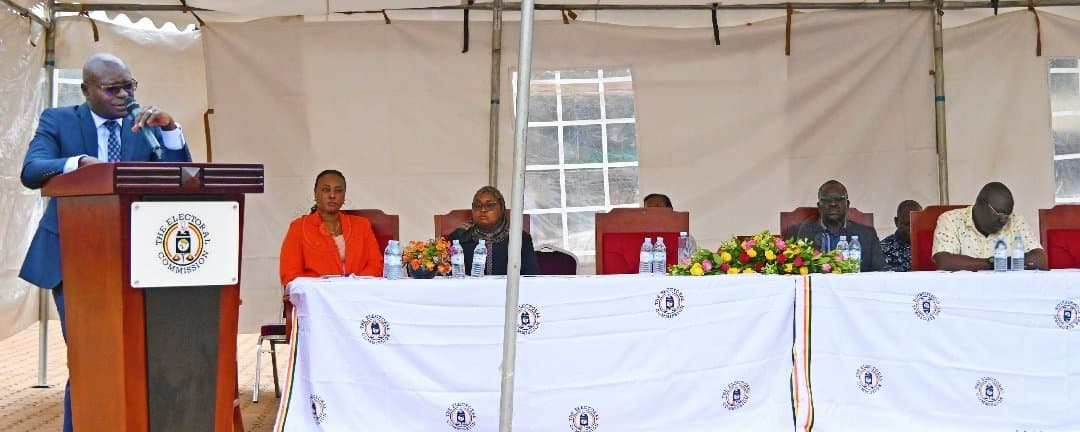
The EC Chairperson, Justice Simon Mugenyi Byabakama, announced the changes during a press briefing at the Commission’s headquarters in Kampala. He explained that the adjustment was necessary to allow sufficient time for critical post-nomination activities before campaigns begin.
“These include capturing of presidential nomination returns, production of ballot paper samples, harmonisation of campaign programmes, and signing of the Memorandum of Undertaking by nominated candidates,” said Justice Byabakama.
He added that sticking to the initial dates would have drastically shortened the campaign period, affecting the effectiveness of the process.
Key Nomination Dates for 2025/2026 General Elections:
- Local Government Candidates (including SIGs): September 3–12, 2025
- Parliamentary Candidates: September 16–17, 2025
- Presidential Candidates: September 23–24, 2025
- SIG Representatives to Local Governments: December 8–12, 2025
Campaign Periods:
- Presidential Campaigns: October 4, 2025 – January 12, 2026
- Parliamentary Campaigns: September 23, 2025 – January 12, 2026
- Local Governments (incl. SIGs): September 13, 2025 – January 12, 2026
Polling for all elective positions will take place between January 12 and February 9, 2026, in line with Article 61(2) of Uganda’s Constitution.
Requirements for Presidential Candidates
Justice Byabakama reminded presidential aspirants that under Section 10(b) of the Presidential Elections Act, each candidate must be endorsed by at least 100 registered voters from at least 97 districts (two-thirds of Uganda’s districts). The Commission will soon release timelines for collection and submission of these supporter signatures, along with nomination guidelines.
Academic Qualification Clarifications
The EC also clarified procedures regarding academic qualifications for aspirants. A minimum of Advanced Level (A’ Level) standard or its equivalent is required for presidential, parliamentary, and district/city chairperson (or lord mayor) aspirants.
Candidates who obtained their qualifications outside Uganda must seek verification from the National Council for Higher Education (NCHE) in consultation with UNEB, and obtain a certificate of verification or equivalency.
Justice Byabakama emphasized that certificates of equivalency from previous elections are not valid for the 2025/2026 electoral cycle.
“You must obtain a fresh certificate unless you have since acquired a higher qualification from within Uganda, such as a degree,” he clarified.
However, the following categories of aspirants are exempt from submitting new academic qualifications:
- Those with an A’ Level certificate obtained in Uganda
- Those with a higher qualification acquired within Uganda
- Those with qualifications higher than A’ Level obtained from the former University of East Africa or any of its constituent colleges
Call for Continued Participation
Justice Byabakama thanked stakeholders and voters, especially Special Interest Groups (SIGs) — Older Persons, Persons with Disabilities, and Youth — for their participation in the ongoing electoral programmes.
He urged all political players to stay committed to the electoral calendar.
“We call upon all stakeholders to participate in the ongoing and remaining activities in line with the Roadmap and electoral guidelines,” he concluded.