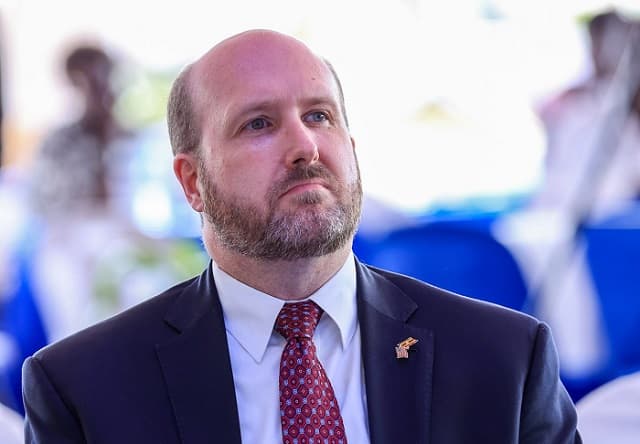
The Trump administration has quietly recalled nearly 30 ambassadors, including the US Ambassador to Uganda William W. Popp, as part of a broader plan to promote diplomats loyal to the current administration, diplomatic sources say. The move has sparked concern among career foreign service officers and their union over potential politicisation of the US diplomatic corps.
The recalled diplomats, mostly career officers who traditionally remain apolitical, will reportedly be reassigned rather than dismissed. A senior State Department official defended the reshuffle, saying, “An ambassador is a personal representative of the President, and it is the President’s right to ensure that he has individuals in these countries who advance the America First agenda.”
The Guardian Newspaper reported that the promotion process has been adjusted to favor diplomats seen as supportive of the Trump administration, raising alarms that the changes could undermine merit-based career progression. The American Foreign Service Association (AFSA) criticised the policy, stating, “Foreign Service staff who dutifully executed the policies and procedures of a previous administration should not be penalized by retroactively imposed changes to the promotion precepts.”
Africa was the region most affected, with ambassadors or chiefs of mission recalled from Niger, Uganda, Senegal, Somalia, Côte d’Ivoire, Mauritius, Nigeria, Gabon, Congo, Burundi, Cameroon, and Rwanda. Other affected regions include the Middle East and Europe. One former senior official described the process as “random” and said, “No one knows why they were pulled or spared.”
Critics argue the reshuffle could weaken US influence globally. Senator Jeanne Shaheen warned, “President Trump is giving away US leadership to China and Russia by removing qualified career ambassadors who serve faithfully no matter who’s in power. This makes America less safe, less strong and less prosperous.”
Secretary of State Marco Rubio confirmed that the administration had revised promotion criteria and panels, aiming to elevate diplomats aligned with White House priorities, including limiting immigration. AFSA and other foreign service officials fear the move risks eroding the professionalism and impartiality of the US diplomatic service.