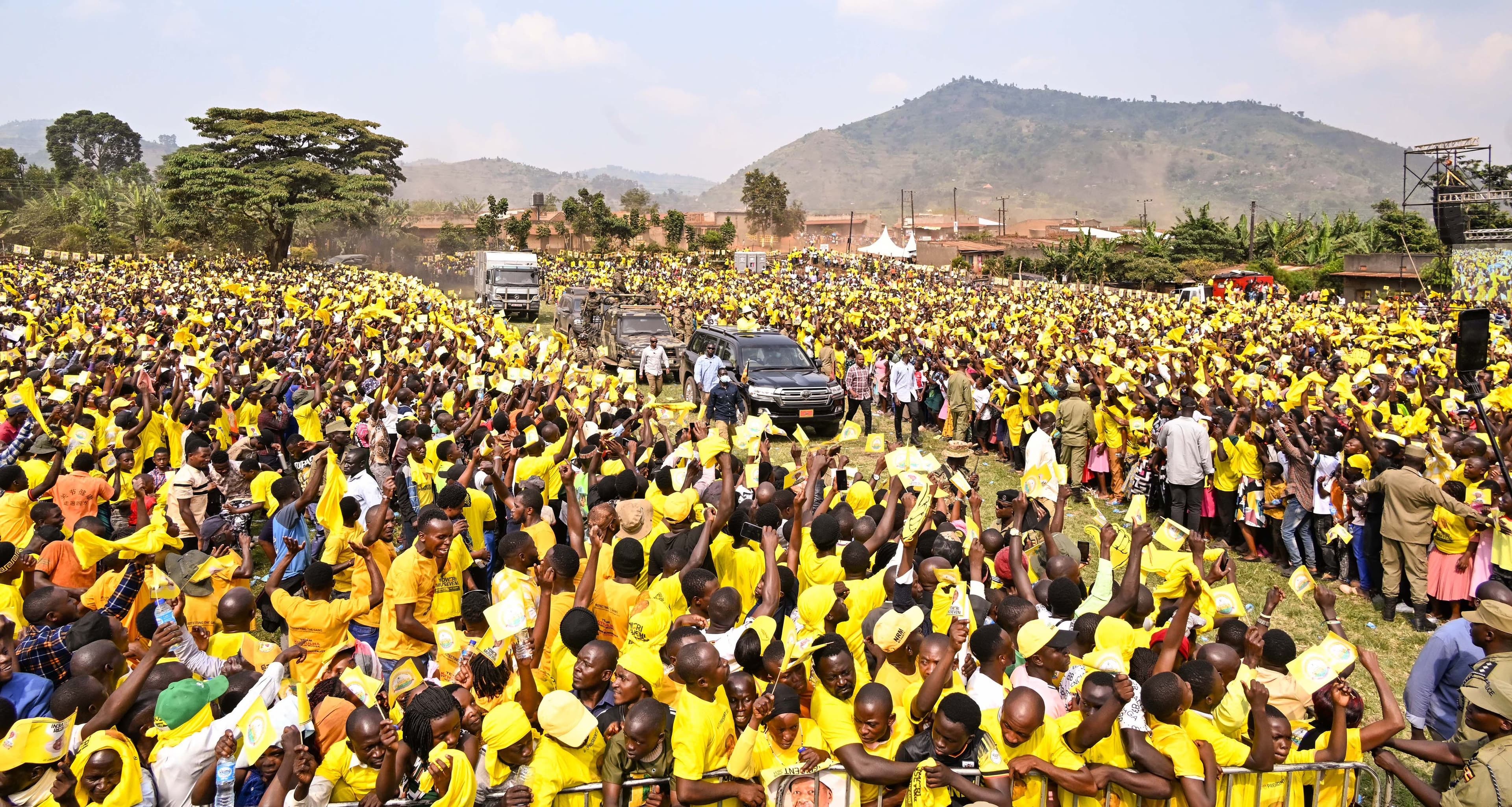
President Yoweri Kaguta Museveni on Monday returned to the Rwenzori region with a campaign stop in Busongora North Constituency, Kasese District, where he framed peace, wealth creation and job growth as the National Resistance Movement’s defining legacy and priority ahead of the 2026 general elections.
Addressing supporters at Nkaiga Primary School in Maliba Sub-county, the President said Uganda’s stability was the NRM’s most fundamental achievement, arguing that past instability stemmed from sectarian politics based on religion and tribe.
“Instability had eluded Uganda because politics was based on religion and tribe. With that kind of politics, you cannot build strong national institutions,” President Museveni said.
He cited the political divisions at independence in 1962, when parties were largely organised along religious and regional lines, leading to fragile alliances and eventual conflict. The NRM, he said, deliberately rejected that model in favour of inclusive national politics, which enabled the building of strong institutions, including a professional army.
“That is how we got peace, through clean politics and strong national institutions,” he said, describing stability as the foundation for all other progress.
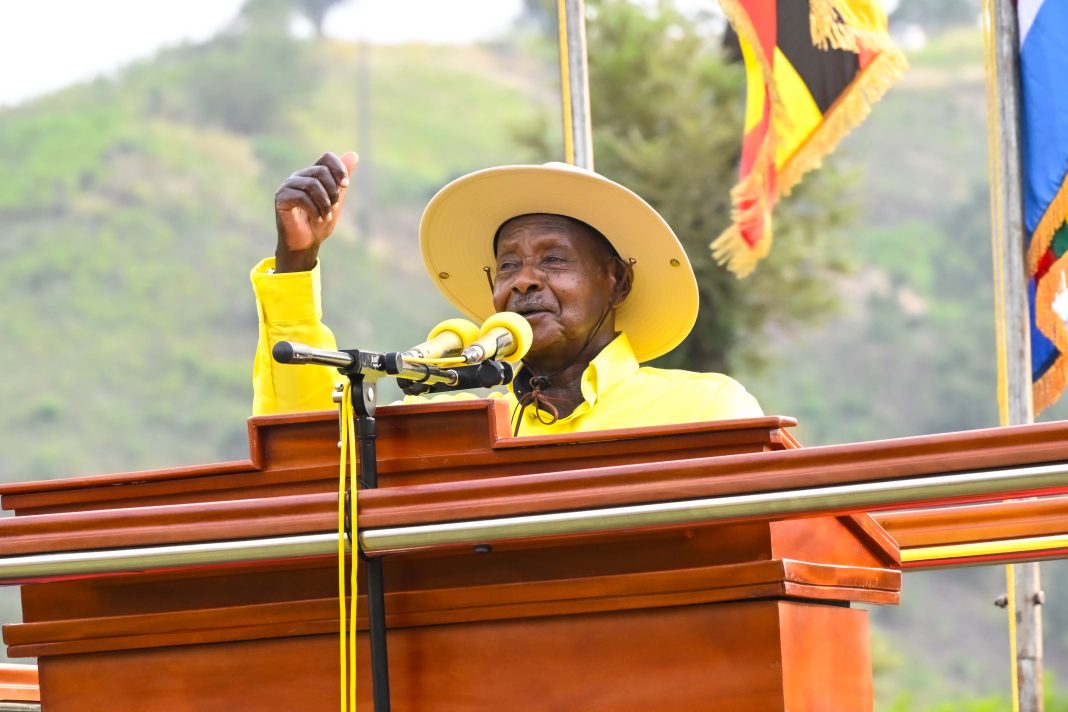
Turning to development, President Museveni pointed to expanded access to roads, electricity, schools, clean water, health centres and bridges under NRM governments. However, he stressed that infrastructure alone does not eliminate household poverty.
“You may have a good tarmac road, but you don’t sleep on that road at night,” he said. “You sleep in your house, and when you return, poverty welcomes you back.”
He explained that this distinction informed the NRM’s long-standing focus on wealth creation at household level, alongside national development. Using Kasese as an example, he cited opportunities in coffee growing and tourism linked to the Rwenzori Mountains and national parks, while emphasising the interdependence of Uganda’s regions.
“Somebody who does not appreciate Uganda as one country is an enemy of Uganda,” President Museveni said.
On wealth creation, the President recalled the four-acre model introduced in the 1996 NRM manifesto, designed to help smallholder farmers produce both food and income. Under the model, farmers combine coffee, food crops, fruits and pasture for dairy, supported by backyard enterprises such as poultry, piggery or fish farming.
He cited the Kamanyire Demonstration Farm in Kakumiro District, owned by the state Minister for Transport, Fred Byamukama, as evidence that the approach works. The farm integrates coffee, bananas, pineapples, poultry, dairy and piggery enterprises.
“That is from eggs alone, without counting coffee, bananas, milk, and pigs,” President Museveni said, referring to the farm’s reported earnings and describing it as proof of ideas the NRM has promoted since the 1990s.
He also highlighted examples from regions often associated with poverty, including Abim District in Karamoja, to argue that wealth depends on enterprise choice and management rather than location.
“That man is in Abim, Karamoja, very far from here, with no tarmac road and no electricity, but wealth is there,” he said, referring to a farmer who benefited from Operation Wealth Creation and the Parish Development Model.
President Museveni traced the evolution of government income-support programmes from Entandikwa and NAADS to Operation Wealth Creation and the Parish Development Model, which he said was designed to address past weaknesses by sending funds directly to parish SACCOs.
“In the third year, the money starts coming back, and in five years, the parish will have over Shs500 million,” he said, adding that Kasese had registered encouraging performance under the programme.
He also revealed plans for additional targeted funding for groups including parish leaders, unemployed university graduates, ghetto youth, boda boda riders, religious leaders and cultural institutions.
“The idea is that everyone must be involved in wealth creation. We do not want spectators,” he said.
On jobs, President Museveni challenged the view that employment should come mainly from government, noting that the public service employs about 480,000 people in a country of over 50 million.
“Where do jobs come from?” he asked. “They come from commercial agriculture, manufacturing, services, and artisanship.”
He cited a poultry farmer in Kamuli District who shifted from politics to enterprise and now employs hundreds of people.
“He had no job himself, but now he has created wealth and jobs for others,” the President said.
He also pointed to growth in manufacturing, citing the Sino-Uganda Mbale Industrial Park, which he said hosts dozens of factories and employs thousands.
For Kasese, President Museveni identified commercial agriculture, tourism and service industries as key drivers of future jobs and income, and urged voters to back the NRM in the 2026 elections to consolidate gains in peace and economic transformation.
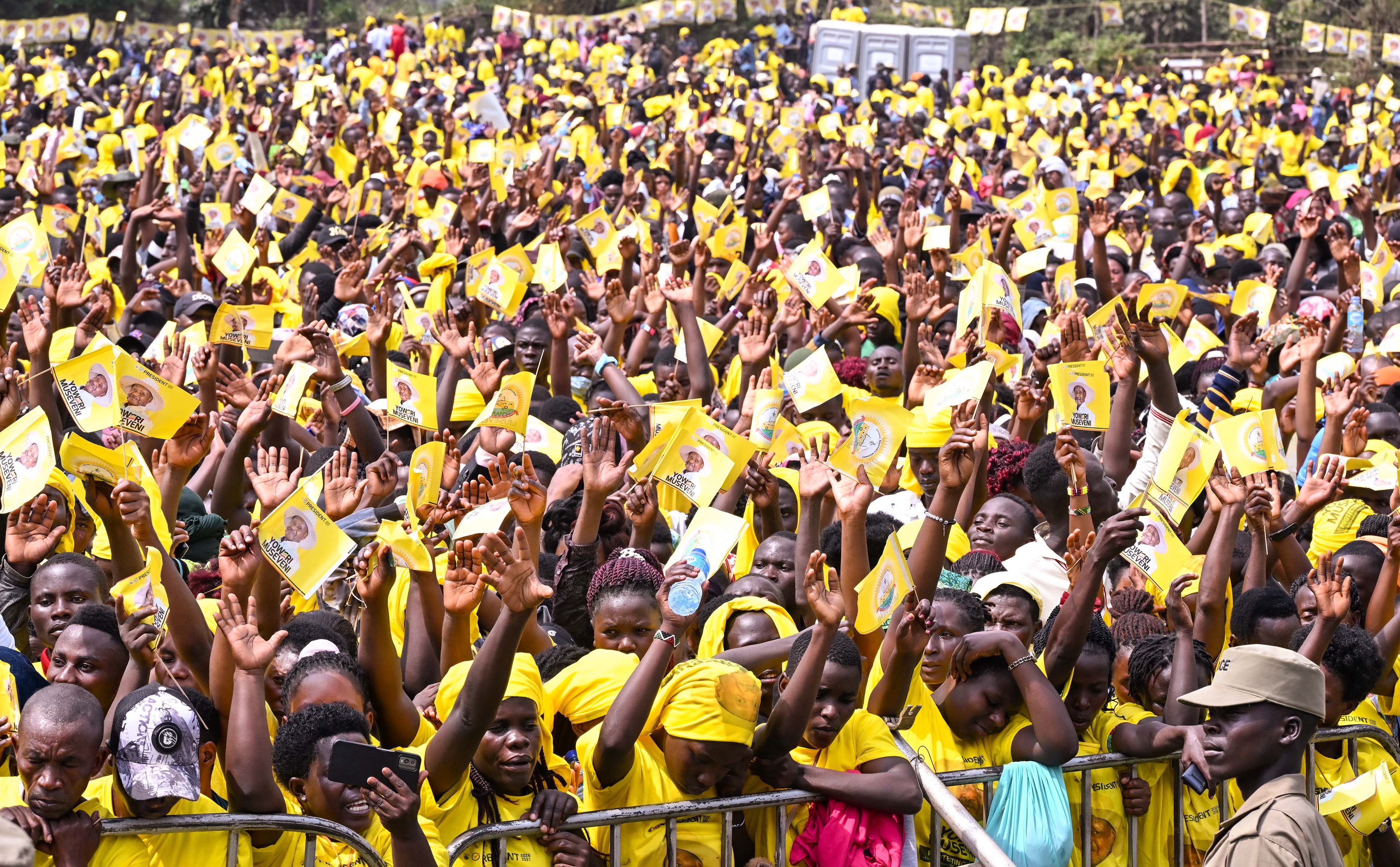
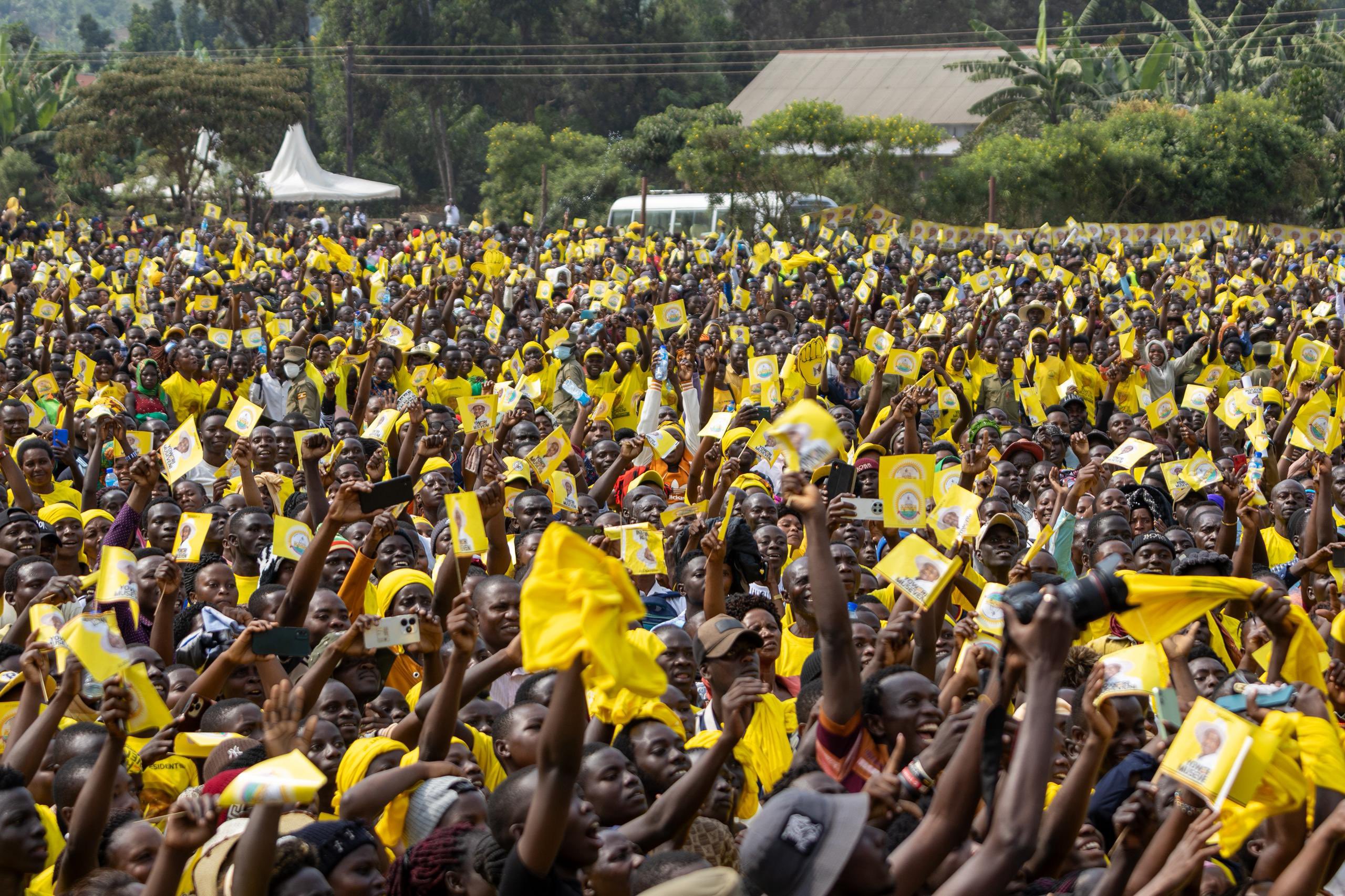
The Busongora North rally was attended by ministers, members of the NRM Central Executive Committee, Members of Parliament and party flag bearers from Kasese and neighbouring districts.