

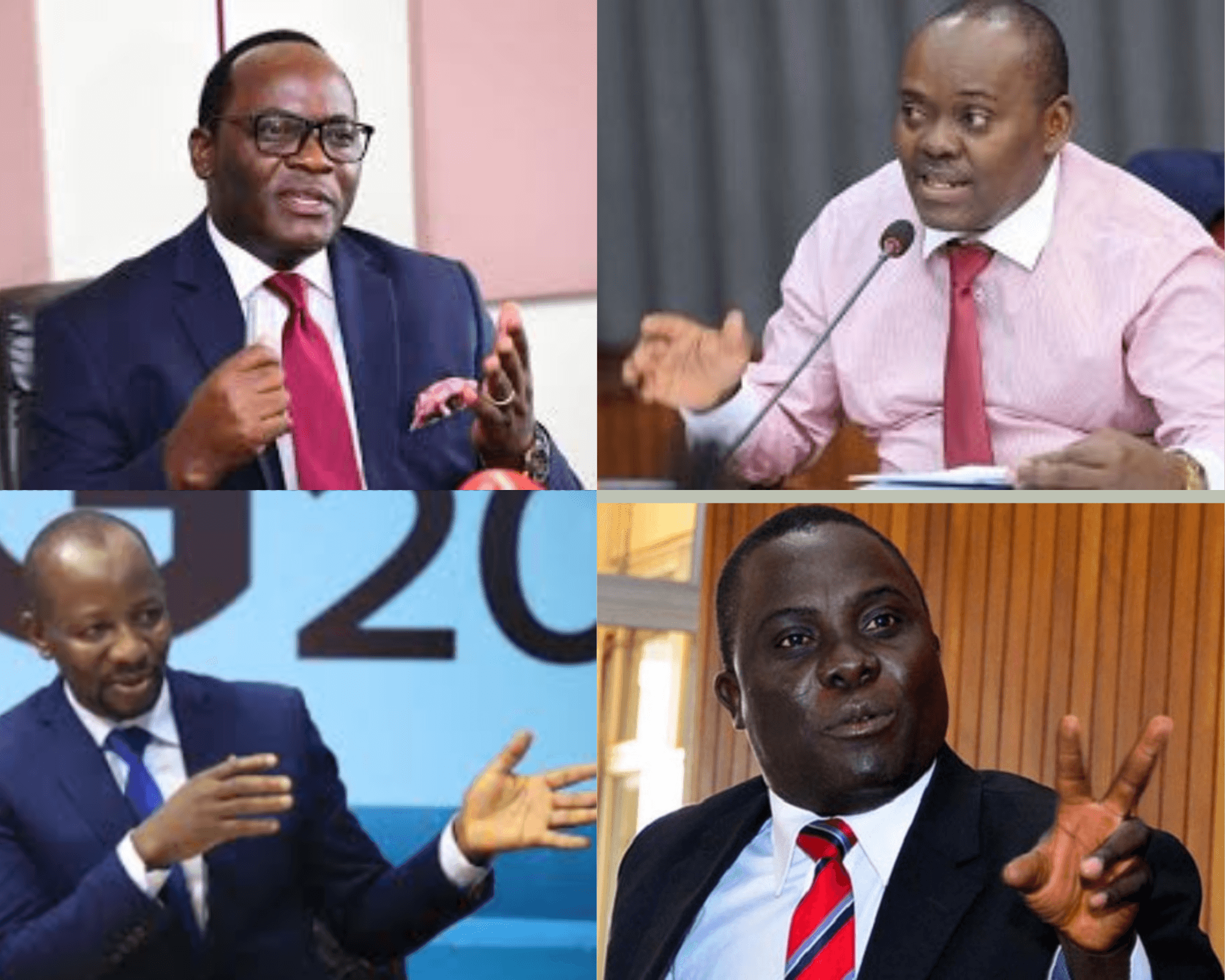
The political influence of the once-powerful Suubi pressure group in Buganda has suffered a major setback following the 2026 general elections, with most of its leading figures losing their parliamentary seats, leaving only Mukono Municipality MP Betty Nambooze standing.
For more than a decade, Suubi-aligned politicians shaped Buganda’s opposition politics, mobilising around federalism, human rights, and the return of kingdom properties. However, the 2026 polls marked a turning point as voters across key constituencies withdrew support from several of the group’s most recognisable faces.
Former Leader of Opposition Mathias Mpuuga was among the high-profile casualties after losing the Nyendo–Mukungwe seat to National Unity Platform (NUP) candidate Lubowa Ssebina Gyaviira. His defeat followed months of political turbulence sparked by his fallout with NUP leadership over a controversial parliamentary service award.
Former Leader of Opposition Prof. Ogenga Latigo said Mpuuga’s loss was avoidable.
“I told them they would lose. I even told him on TV that he would lose,” Latigo said. “I advised him to reach out, including to religious leaders, find a mutual understanding and go back to working together.”
Latigo argued that national leadership demands broader engagement beyond local strongholds.
“When you move from Buganda to being Leader of the Opposition, your representation is no longer just about the constituency,” he said. “You are expected to work with other leaders and represent the interests of the whole country.”
Other prominent Suubi-linked figures also fell short in Buganda constituencies, reinforcing perceptions that the group’s collective influence has waned amid shifting opposition dynamics and internal realignments within NUP.
Among those who failed to return to Parliament, deepening the group’s electoral decline in Buganda include Muhammad Muwanga Kivumbi, the long-serving MP for Butambala County and a key Suubi voice on constitutional and governance issues, lost his seat after a bruising contest.
Medard Lubega Sseggona, the Busiro East MP known for his strong legal advocacy and parliamentary oversight, was also voted out, ending his long run in the House. Ibrahim Ssemujju Nganda, who had been closely associated with the Suubi bloc and Buganda-centric opposition politics, similarly failed to secure re-election in Kira Municipality.
Their defeats marked a significant collapse of a generation of Buganda-based opposition leaders who once campaigned as a coordinated force across party lines, united by shared positions on federalism, human rights, and Buganda Kingdom interests.
The decline of Suubi’s electoral fortunes comes against the backdrop of changing leadership in Parliament. NUP president Robert Kyagulanyi appointed Joel Ssenyonyi as Leader of Opposition, replacing Mpuuga, who was named a parliamentary commissioner. The decision exposed ideological and generational tensions within the opposition.
NRM Director of Information and Publicity Emmanuel Dombo said the changes signaled a deliberate shift.
“They may not be as loyal as those Ghetto people with whom he started,” Dombo said, referring to Kyagulanyi’s political base.
“As he increasingly senses a greater sense of safety and strength, he is expected to gradually distance himself from the older Suubi members and introduce founding members of the National Unity Platform,” he added.
When hope was at it's peak
To understand the gravity of this "fall," one must recall the "rise." Formed in the heat of 2010, Suubi 2011 was more than a pressure group; it was a psychological bridge. Led by the venerable former Katikkiro Joseph Mulwanyamuli Ssemogerere, it sought to marry the traditional interests of the Buganda Kingdom, Federo (federalism), the return of Ebyaffe (kingdom properties), and human rights—with the radical energy of the national opposition.
In 2011, Suubi was the kingmaker. It was the engine that powered Dr. Kizza Besigye to a historic 31.7% in Buganda. Its members, Mathias Mpuuga, Medard Sseggona, and Muwanga-Kivumbi were the "intellectual warriors" who brought gravitas to the struggle, blending legal brilliance with a deep-rooted loyalty to the Kabaka.
The NUP Marriage and the Seeds of Discord
By 2021, the Suubi veterans recognized the shifting winds and joined the National Unity Platform (NUP). They provided the "People Power" movement with the legislative backbone it desperately needed. However, as the 2026 election approached, the marriage between the "Intellectuals" and the "Ghetto base" turned sour.
The replacement of Mathias Mpuuga with Joel Ssenyonyi as Leader of the Opposition (LoP) was the first public tremor. But the final rupture came with the Shs 1.7 billion Service Award controversy. To the NUP base, it was "treachery"; to the Suubi members, it was a standard parliamentary entitlement. NRM spokesperson Emmanuel Dombo’s prophecy finally came true: Robert Kyagulanyi (Bobi Wine) had begun to distance himself from the "older structures" in favor of founding members who "salute" and wear the red beret with unquestioning loyalty.
But why?
Political analyst Patrick Wakida urged caution against reading the losses as a purge.
“This notion I think is planted by many factors or even the DP itself,” Wakida said. “Any individual departing from a political organization leaves a gap, and any individual joining a new organization brings their own experiences and ideas.”
Many political analysts said the reshuffle reflected a return to NUP’s original identity.
“Instead of reaching out, they are going back to their base. People who are the large nucleus of the People Power movement that has now come into NUP,” one analyst said.
Despite the sweeping defeats, Betty Nambooze once again defied political headwinds in Mukono Municipality, retaining her seat and emerging as the lone Suubi figure to survive the 2026 shake-up in Buganda. Her victory underscored her enduring personal appeal and grassroots connection, even as the broader Suubi project struggles to remain electorally relevant.
As Parliament prepares for a new term, the absence of many Suubi veterans signals the end of an era in Buganda’s opposition politics, raising questions about how experience, loyalty, and ideology will shape the next phase of political competition in the region.